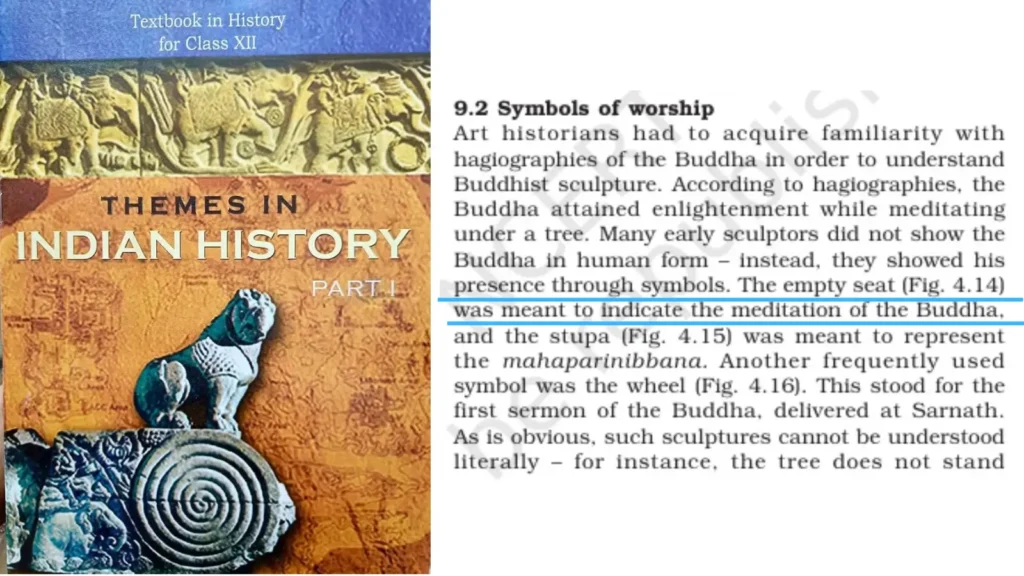
Question 6. What does an empty seat represent in early Buddhist iconography?
(a) The meditation of the Buddha
(b) The Buddha’s First Sermon
(c) The Buddha’s Mahaparinibbana
(d) The Buddha’s Mahabhinishkramana
Answer: (a) The meditation of the Buddha
Explanation:
The empty seat (or empty throne) in early Buddhist iconography represents the Buddha in meditation, particularly his meditation under the Bodhi tree leading to enlightenment.
In early Buddhist art, especially at sites such as Sanchi and Bharhut, the Buddha was often represented through symbols rather than depicted in human form. The empty seat symbolically indicated his presence and the sacred place of his enlightenment.
Important Symbols in Early Buddhist Art
- Empty seat: Represents the Buddha’s meditation.
- Bodhi tree: Symbolises the Buddha’s enlightenment.
- Dharma Chakra (Wheel of Law): Represents the Buddha’s First Sermon.
- Stupa: Associated with the Buddha’s relics and the commemoration of his Mahaparinirvana.
Subject: Ancient Indian History
Topic: Jainism and Buddhism
Source: NCERT, Class 12 History, Themes in Indian History, Part I, Theme 4, “Thinkers, Beliefs and Buildings,”