The Union Public Service Commission (UPSC) is India’s premier constitutional body responsible for conducting examinations and undertaking recruitment for various services and posts under the Union Government. Its institutional history dates back to 1 October 1926, when the first Public Service Commission was established in British India.
Over the last hundred years, the Commission has undergone several changes in its name, structure and constitutional status. It was initially known as the Public Service Commission, became the Federal Public Service Commission in 1937 and acquired its present identity as the Union Public Service Commission (UPSC) on 26 January 1950, when the Constitution of India came into force.
Since its establishment in 1926, the Commission has been headed by several distinguished individuals. Sir Ross Barker was its first Chairman, while H. K. Kripalani became the first Indian to head the Commission in 1947. Rose Millian Bathew (Kharbuli) became the first woman Chairperson in 1992.
This article provides the complete chronological list of Chairpersons of the Public Service Commission, Federal Public Service Commission and Union Public Service Commission from 1926 to 2026, along with their tenures and important historical facts.
Note: One important distinction is essential for historical accuracy: the Commission established in 1926 was initially the Public Service Commission; it became the Federal Public Service Commission in 1937, and the Union Public Service Commission on 26 January 1950. Therefore, the 1926–1950 entries should not all be labelled “UPSC Chairmen” retrospectively.
Also Read in detail: About UPSC – Union Public Service Commission
Chairpersons of the Public Service Commission and Federal Public Service Commission (1926–1950)
The first Public Service Commission was established on 1 October 1926. Following the Government of India Act, 1935, it became the Federal Public Service Commission with effect from 1 April 1937. The following individuals headed the Commission during this period:
The following table provides the chronological list of individuals who headed the Public Service Commission and its subsequent institutional forms between 1926 and 2026. The first four Chairpersons served before Independence, while H. K. Kripalani became the first Indian Chairman in 1947.
| S. No. | Name of the Head / Chairman | From | To |
|---|---|---|---|
| 1 | Sir Ross Barker | October 1926 | August 1932 |
| 2 | Sir David Petrie | August 1932 | 1936 |
| 3 | Sir Eyre Gordon | 1937 | 1942 |
| 4 | Sir F. W. Robertson | 1942 | 1947 |
| 5 | H. K. Kripalani | 1 April 1947 | 13 January 1949 |
| 6 | R. N. Banerjee | 14 January 1949 | 9 May 1955 |
Chairpersons of the Union Public Service Commission (1950–2026)
After the Constitution of India came into force on 26 January 1950, the Federal Public Service Commission became the Union Public Service Commission. R. N. Banerjee, who had assumed office in January 1949, continued as Chairman of the Commission after it acquired its present constitutional identity.
| S. No. | Name of Chairman | From | To |
|---|---|---|---|
| 1 | R. N. Banerjee | 26 January 1950 | 9 May 1955 |
| 2 | N. Govindarajan | 10 May 1955 | 9 December 1955 |
| 3 | V. S. Hejmadi | 10 December 1955 | 9 December 1961 |
| 4 | B. N. Jha | 11 December 1961 | 22 February 1967 |
| 5 | K. R. Damle | 18 April 1967 | 2 March 1971 |
| 6 | Ranadhir Chandra Sarma Sarkar | 11 May 1971 | 1 February 1973 |
| 7 | Akhlaqur Rahman Kidwai | 5 February 1973 | 4 February 1979 |
| 8 | M. L. Shahare | 16 February 1979 | 16 February 1985 |
| 9 | H. K. L. Capoor | 18 February 1985 | 5 March 1990 |
| 10 | J. P. Gupta | 5 March 1990 | 2 June 1992 |
| 11 | Rose Millian Bathew (Kharbuli) | 23 September 1992 | 23 August 1996 |
| 12 | S. J. S. Chhatwal | 23 August 1996 | 30 September 1996 |
| 13 | J. M. Qureshi | 30 September 1996 | 11 December 1998 |
| 14 | Surendra Nath | 11 December 1998 | 25 June 2002 |
| 15 | Purna Chandra Hota | 25 June 2002 | September 2003 |
| 16 | Mata Prasad | September 2003 | January 2005 |
| 17 | S. R. Hashim | 4 January 2005 | 1 April 2006 |
| 18 | Gurbachan Jagat | 1 April 2006 | 30 June 2007 |
| 19 | Subir Dutta | 30 June 2007 | 16 August 2008 |
| 20 | D. P. Agrawal | 16 August 2008 | August 2014 |
| 21 | Rajni Razdan | 16 August 2014 | 21 November 2014 |
| 22 | Deepak Gupta | 22 November 2014 | 20 September 2016 |
| 23 | Alka Sirohi | 21 September 2016 | 3 January 2017 |
| 24 | David R. Syiemlieh | 4 January 2017 | 21 January 2018 |
| 25 | Vinay Mittal | 22 January 2018 | 19 June 2018 |
| 26 | Arvind Saxena | 20 June 2018 | 6 August 2020 |
| 27 | Pradeep Kumar Joshi | 7 August 2020 | 4 April 2022 |
| 28 | Manoj Soni | 5 April 2022 | July 2024 |
| 29 | Preeti Sudan | 1 August 2024 | 29 April 2025 |
| 30 | Ajay Kumar | 15 May 2025 | Incumbent (2026) |
Note: The tenure dates above follow the commonly published chronological record. Some historical entries are available only to the month or year, rather than an exact day. The transition dates for certain successive Chairpersons may also appear on the same date in published lists. Dr. Ajay Kumar assumed charge on 15 May 2025, as confirmed by the Press Information Bureau. His scheduled date of retirement as Chairman is 1 October 2027, subject to the applicable constitutional provisions.
Who Was the First Chairman of the Public Service Commission in India?
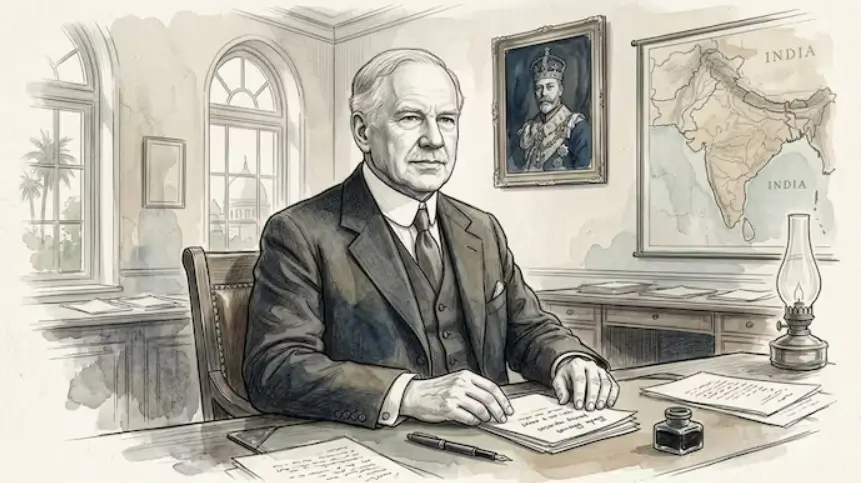
Sir Ross Barker was the first Chairman of the Public Service Commission in India. He assumed office on 1 October 1926, when the first Public Service Commission was established during British rule.
The establishment of the Commission followed the recommendations of the Royal Commission on the Superior Civil Services in India, popularly known as the Lee Commission. The Lee Commission was appointed in 1923 under the chairmanship of Lord Lee of Fareham and submitted its report in 1924. It recommended the establishment of a Public Service Commission to improve the recruitment and administration of civil services in India.
The first Commission was established as an advisory body. It initially consisted of a Chairman and four members, and its role was considerably more limited than that of the present constitutional UPSC.
Sir Ross Barker headed the Commission from October 1926 to August 1932. His tenure marked the beginning of the institutional history that eventually led to the formation of the present Union Public Service Commission.
Important facts:
- First Chairman: Sir Ross Barker
- Establishment of the first Public Service Commission: 1 October 1926
- First Chairman’s tenure: October 1926 – August 1932
- Nature of the initial Commission: Advisory body
Who Was the First Indian to head the Public Service Commission of India?
H. K. Kripalani was the first Indian to head the Public Service Commission. He assumed office on 1 April 1947, when the institution was known as the Federal Public Service Commission, and served until 13 January 1949.
His appointment was an important milestone in the history of the Commission because the institution had previously been headed by British officials. Kripalani was the first Indian to occupy the position of Chairman.
There is, however, an important historical distinction when using the expression “first Indian UPSC Chairman”. H. K. Kripalani became Chairman in 1947, before the Constitution came into force and before the Federal Public Service Commission formally became the Union Public Service Commission. Therefore, he is correctly described as the first Indian Chairman of the Commission.
R. N. Banerjee, who succeeded Kripalani on 14 January 1949, was serving as Chairman when the Constitution came into force on 26 January 1950. He therefore became the first Chairman of the Commission in its present constitutional form as the Union Public Service Commission. He continued in office until 9 May 1955.
For factual clarity:
- First Indian to head the Commission: H. K. Kripalani (1947).
- Chairman when the Commission became the UPSC on 26 January 1950: R. N. Banerjee.
Who Was the First Woman UPSC Chairperson?
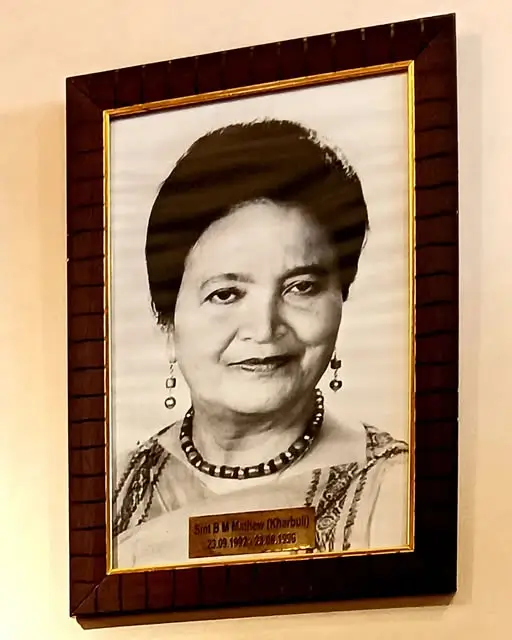
Rose Millian Bathew (Kharbuli) was the first woman Chairperson of the Union Public Service Commission. She assumed office on 23 September 1992 and served until 23 August 1996.
Her appointment in 1992 was a significant milestone in the history of the Commission, marking the first time a woman headed the institution. She is recognised as the first woman to serve as Chairperson of the UPSC.
Other women who subsequently headed the Commission include Rajni Razdan, Alka Sirohi and Preeti Sudan.
Important facts:
- First woman UPSC Chairperson: Rose Millian Bathew (Kharbuli).
- Assumed office: 23 September 1992.
- End of tenure: 23 August 1996.
Current UPSC Chairman and Members in 2026
Dr. Ajay Kumar is the Chairman of the Union Public Service Commission as of November 2026. He assumed charge on 15 May 2025 after taking the oath of office and secrecy. He is a retired 1985-batch Indian Administrative Service (IAS) officer of the Kerala cadre and previously served as Secretary in the Ministry of Defence.
Dr. Ajay Kumar studied Electrical Engineering at the Indian Institute of Technology (IIT), Kanpur. He also holds a Master’s degree in Applied Economics and a PhD in Business Administration from the University of Minnesota, USA.
The Commission’s membership, as reflected in the Government of India’s 2026 centenary backgrounder, consists of the Chairman and eight members.
List of Current UPSC Members (2026)
| S. No. | Name | Designation |
|---|---|---|
| 1 | Dr. Ajay Kumar | Chairman |
| 2 | Lt. Gen. Raj Shukla (Retd.) | Member |
| 3 | Ms. Suman Sharma | Member |
| 4 | Shri Bidyut Behari Swain | Member |
| 5 | Dr. Dinesh Dasa | Member |
| 6 | Shri Sheel Vardhan Singh | Member |
| 7 | Shri Sanjay Verma | Member |
| 8 | Smt. Sujata Chaturvedi | Member |
| 9 | Smt. Anuradha Prasad | Member |
Three of the eight members are women: Suman Sharma, Sujata Chaturvedi and Anuradha Prasad. The composition and names above are reported in the Government of India’s UPSC centenary backgrounder published on 30 September 2026.
For the latest official information, including any subsequent appointments or changes in membership, refer to the official UPSC Commission page.
Important Facts about the History of UPSC
- 1926: The first Public Service Commission was established on 1 October 1926.
- First Chairman: Sir Ross Barker.
- 1935: The Government of India Act, 1935 provided for a Federal Public Service Commission.
- 1937: The Federal Public Service Commission came into operation on 1 April 1937.
- 1947: H. K. Kripalani became the first Indian Chairman of the Commission.
- 1950: The Federal Public Service Commission became the Union Public Service Commission on 26 January 1950.
- First woman Chairperson: Rose Millian Bathew (Kharbuli), who assumed office in 1992.
- 2026: The Commission completed 100 years of its institutional journey on 1 October 2026.
Frequently Asked Questions (FAQs)
1. Who was the first Chairman of UPSC?
Sir Ross Barker was the first Chairman of the Public Service Commission established in India on 1 October 1926. Strictly speaking, the institution was not called the UPSC at that time; it acquired its present name on 26 January 1950.
2. Who was the first Indian Chairman of UPSC?
H. K. Kripalani was the first Indian to head the Commission. He became Chairman of the Federal Public Service Commission on 1 April 1947. R. N. Banerjee was the Chairman when the institution became the UPSC in 1950.
3. Who was the first woman Chairman of UPSC?
Rose Millian Bathew (Kharbuli) was the first woman Chairperson of the UPSC. She served from 23 September 1992 to 23 August 1996.
4. Who is the current UPSC Chairman in 2026?
Dr. Ajay Kumar is the current UPSC Chairman as of November 2026. He assumed office on 15 May 2025.
5. How many Chairpersons have headed the Commission since 1926?
The chronological list contains 35 Chairpersons from the establishment of the first Public Service Commission in 1926 through the incumbent Chairman in 2026.
6. When did the Public Service Commission become the UPSC?
The Federal Public Service Commission became the Union Public Service Commission on 26 January 1950, when the Constitution of India came into force.
7. Who was the UPSC Chairman before Dr. Ajay Kumar?
Preeti Sudan was the immediate predecessor of Dr. Ajay Kumar. She assumed office on 1 August 2024 and served until 29 April 2025.
Sources and References
- Union Public Service Commission – The Commission. Official information about the Chairman and members.
- UPSC – About Us and Historical Perspective. Institutional history, constitutional provisions and functions.
- Press Information Bureau – Union Public Service Commission: A Century of Meritocracy and Inclusion (30 September 2026).
- Press Information Bureau – Dr. Ajay Kumar Assumes Charge as Chairman, UPSC (15 May 2025).
Last updated: November 2026.
Multiple Choice Questions (MCQs) on the Union Public Service Commission (UPSC)
Question 1. With reference to the establishment of the Public Service Commission in India, consider the following statements:
1. The first Public Service Commission in India was established on 1 October 1926.
2. Sir Ross Barker was its first Chairman.
3. The Commission was initially established as a constitutional body under the Constitution of India.
Which of the statements given above are correct?
(a) 1 and 2 only
(b) 2 and 3 only
(c) 1 and 3 only
(d) 1, 2 and 3
Answer: (a) 1 and 2 only
Explanation: The first Public Service Commission in India was established on 1 October 1926, with Sir Ross Barker as its first Chairman. It was established during British rule and was initially an advisory body. The constitutional status of the Union Public Service Commission came with the Constitution of India in 1950.
Question 2. Who was the first Chairman of the Public Service Commission established in India in 1926?
(a) Sir David Petrie
(b) Sir Ross Barker
(c) Sir Eyre Gordon
(d) Sir F. W. Robertson
Answer: (b) Sir Ross Barker
Explanation: Sir Ross Barker became the first Chairman of the Public Service Commission when it was established on 1 October 1926. The institution was subsequently transformed into the Federal Public Service Commission in 1937 and the Union Public Service Commission in 1950.
Question 3. The Public Service Commission established in 1926 was initially constituted with:
(a) A Chairman and two members
(b) A Chairman and three members
(c) A Chairman and four members
(d) A Chairman and five members
Answer: (c) A Chairman and four members
Explanation: The Public Service Commission established in 1926 initially consisted of a Chairman and four members. It functioned primarily as an advisory body in matters relating to public services.
Question 4. Consider the following pairs of institutional names and their respective periods:
1. Public Service Commission – 1926
2. Federal Public Service Commission – 1937
3. Union Public Service Commission – 1950
Which of the pairs given above are correctly matched?
(a) 1 and 2 only
(b) 2 and 3 only
(c) 1 and 3 only
(d) 1, 2 and 3
Answer: (d) 1, 2 and 3
Explanation: The institution was established as the Public Service Commission on 1 October 1926. It became the Federal Public Service Commission on 1 April 1937 under the Government of India Act, 1935. Following the commencement of the Constitution of India on 26 January 1950, it came to be known as the Union Public Service Commission.
Question 5. The Federal Public Service Commission was established in 1937 under the provisions of which of the following?
(a) Indian Councils Act, 1909
(b) Government of India Act, 1919
(c) Government of India Act, 1935
(d) Indian Independence Act, 1947
Answer: (c) Government of India Act, 1935
Explanation: The Government of India Act, 1935 provided for the establishment of Public Service Commissions at the federal and provincial levels. The Federal Public Service Commission came into existence on 1 April 1937.
Question 6. Who was the first Indian to head the Public Service Commission in India?
(a) R. N. Banerjee
(b) H. K. Kripalani
(c) N. Govindarajan
(d) V. S. Hejmadi
Answer: (b) H. K. Kripalani
Explanation: H. K. Kripalani became the first Indian Chairman of the Commission on 1 April 1947, when it was known as the Federal Public Service Commission. He served until 13 January 1949.
Question 7. Consider the following statements regarding R. N. Banerjee:
1. He succeeded H. K. Kripalani as Chairman of the Federal Public Service Commission.
2. He was the Chairman when the Constitution of India came into force in 1950.
3. He continued as Chairman until 1955.
Which of the statements given above are correct?
(a) 1 and 2 only
(b) 2 and 3 only
(c) 1 and 3 only
(d) 1, 2 and 3
Answer: (d) 1, 2 and 3
Explanation: R. N. Banerjee took over from H. K. Kripalani on 14 January 1949. He was heading the Commission when it became the Union Public Service Commission on 26 January 1950 and continued until 9 May 1955.
Question 8. Who was the first woman to become Chairperson of the Union Public Service Commission?
(a) Rajni Razdan
(b) Alka Sirohi
(c) Rose Millian Bathew (Kharbuli)
(d) Preeti Sudan
Answer: (c) Rose Millian Bathew (Kharbuli)
Explanation: Rose Millian Bathew (Kharbuli) became the first woman Chairperson of the Commission in September 1992. She served from 23 September 1992 to 23 August 1996.
Question 9. Arrange the following Chairpersons of the Commission in chronological order of assuming office:
1. H. K. Kripalani
2. R. N. Banerjee
3. N. Govindarajan
4. V. S. Hejmadi
Select the correct answer using the code given below:
(a) 1 – 2 – 3 – 4
(b) 2 – 1 – 3 – 4
(c) 1 – 3 – 2 – 4
(d) 2 – 3 – 1 – 4
Answer: (a) 1 – 2 – 3 – 4
Explanation: H. K. Kripalani assumed office in April 1947, followed by R. N. Banerjee in January 1949. N. Govindarajan assumed office in May 1955, followed by V. S. Hejmadi in December 1955.
Question 10. Who among the following served as Chairman of the Union Public Service Commission for the longest period among the listed Chairpersons?
(a) R. N. Banerjee
(b) Akhlaqur Rahman Kidwai
(c) M. L. Shahare
(d) D. P. Agrawal
Answer: (b) Akhlaqur Rahman Kidwai
Explanation: Akhlaqur Rahman Kidwai served from 5 February 1973 to 4 February 1979, a period of almost six years. Among the options, this is the longest tenure.
Question 11. Which of the following Chairpersons of the Commission served during the period 1973–1979?
(a) Ranadhir Chandra Sarma Sarkar
(b) Akhlaqur Rahman Kidwai
(c) M. L. Shahare
(d) H. K. L. Capoor
Answer: (b) Akhlaqur Rahman Kidwai
Explanation: Akhlaqur Rahman Kidwai assumed office on 5 February 1973 and served until 4 February 1979. He was followed by M. L. Shahare in February 1979.
Question 12. Consider the following pairs of Chairpersons and their tenures:
1. M. L. Shahare – 1979 to 1985
2. H. K. L. Capoor – 1985 to 1990
3. J. P. Gupta – 1990 to 1992
Which of the pairs given above are correctly matched?
(a) 1 and 2 only
(b) 2 and 3 only
(c) 1 and 3 only
(d) 1, 2 and 3
Answer: (d) 1, 2 and 3
Explanation: M. L. Shahare served from February 1979 to February 1985, H. K. L. Capoor from February 1985 to March 1990, and J. P. Gupta from March 1990 to June 1992.
Question 13. Who among the following became the first woman Chairperson of the Commission in 1992?
(a) Rose Millian Bathew (Kharbuli)
(b) Rajni Razdan
(c) Alka Sirohi
(d) Preeti Sudan
Answer: (a) Rose Millian Bathew (Kharbuli)
Explanation: Rose Millian Bathew (Kharbuli) assumed office on 23 September 1992 and became the first woman to head the Commission. Her tenure ended on 23 August 1996.
Question 14. Which of the following Chairpersons assumed office immediately after Rose Millian Bathew (Kharbuli)?
(a) J. M. Qureshi
(b) S. J. S. Chhatwal
(c) Surendra Nath
(d) Purna Chandra Hota
Answer: (b) S. J. S. Chhatwal
Explanation: S. J. S. Chhatwal assumed office on 23 August 1996, the date on which Rose Millian Bathew’s tenure ended. He served until 30 September 1996 and was followed by J. M. Qureshi.
Question 15. Consider the following pairs:
1. Surendra Nath – 1998 to 2002
2. Purna Chandra Hota – 2002 to 2003
3. Mata Prasad – 2003 to 2005
4. S. R. Hashim – 2005 to 2006
How many of the pairs given above are correctly matched?
(a) Only one
(b) Only two
(c) Only three
(d) All four
Answer: (d) All four
Explanation: All four pairs are correctly matched according to the listed chronology. Surendra Nath served from December 1998 to June 2002, Purna Chandra Hota from June 2002 to September 2003, Mata Prasad from September 2003 to January 2005, and S. R. Hashim from January 2005 to April 2006.
Question 16. Who among the following was the Chairman of the Commission immediately before D. P. Agrawal?
(a) Subir Dutta
(b) Gurbachan Jagat
(c) Rajni Razdan
(d) Deepak Gupta
Answer: (a) Subir Dutta
Explanation: Subir Dutta served from 30 June 2007 to 16 August 2008. D. P. Agrawal assumed office on 16 August 2008 and served until August 2014.
Question 17. Which of the following Chairpersons assumed office in 2014?
1. D. P. Agrawal
2. Rajni Razdan
3. Deepak Gupta
Select the correct answer using the code given below:
(a) 1 and 2 only
(b) 2 and 3 only
(c) 1 and 3 only
(d) 1, 2 and 3
Answer: (d) 1, 2 and 3
Explanation: D. P. Agrawal served until August 2014. Rajni Razdan assumed office on 16 August 2014, followed by Deepak Gupta on 22 November 2014.
Question 18. Arrange the following Chairpersons in chronological order of assuming office:
1. David R. Syiemlieh
2. Vinay Mittal
3. Arvind Saxena
4. Alka Sirohi
Select the correct answer using the code given below:
(a) 4 – 1 – 2 – 3
(b) 1 – 4 – 2 – 3
(c) 4 – 2 – 1 – 3
(d) 1 – 2 – 4 – 3
Answer: (a) 4 – 1 – 2 – 3
Explanation: Alka Sirohi assumed office on 21 September 2016, David R. Syiemlieh on 4 January 2017, Vinay Mittal on 22 January 2018, and Arvind Saxena on 20 June 2018.
Question 19. Who among the following succeeded Arvind Saxena as Chairman of the Commission?
(a) Manoj Soni
(b) Pradeep Kumar Joshi
(c) Ajay Kumar
(d) Preeti Sudan
Answer: (b) Pradeep Kumar Joshi
Explanation: Arvind Saxena served from 20 June 2018 to 6 August 2020. Pradeep Kumar Joshi assumed office on 7 August 2020 and served until 4 April 2022.
Question 20. Consider the following statements about the recent Chairpersons of the Commission:
1. Manoj Soni assumed office in April 2022.
2. Preeti Sudan became Chairperson in August 2024.
3. Ajay Kumar assumed charge in May 2025.
Which of the statements given above are correct?
(a) 1 and 2 only
(b) 2 and 3 only
(c) 1 and 3 only
(d) 1, 2 and 3
Answer: (d) 1, 2 and 3
Explanation: Manoj Soni assumed office on 5 April 2022. Preeti Sudan became Chairperson on 1 August 2024, and Dr. Ajay Kumar assumed charge on 15 May 2025.
Question 21. Who is the Chairperson of the Union Public Service Commission as of November 2026?
(a) Preeti Sudan
(b) Manoj Soni
(c) Dr. Ajay Kumar
(d) Pradeep Kumar Joshi
Answer: (c) Dr. Ajay Kumar
Explanation: Dr. Ajay Kumar assumed charge as Chairman of the UPSC on 15 May 2025. His tenure as Chairman is scheduled to continue until 1 October 2027, subject to the applicable constitutional provisions.
Question 22. As per the Commission’s composition reported in 2026, how many members does the UPSC have apart from its Chairman?
(a) Six
(b) Seven
(c) Eight
(d) Ten
Answer: (c) Eight
Explanation: The Commission’s reported composition in 2026 comprises one Chairman and eight members. The Constitution does not itself specify a fixed number of members; the number is determined by the President of India.
Question 23. Which of the following persons were members of the UPSC as per the Commission’s composition reported in 2026?
1. Lt. Gen. Raj Shukla (Retd.)
2. Suman Sharma
3. Bidyut Behari Swain
4. Dinesh Dasa
Select the correct answer using the code given below:
(a) 1 and 2 only
(b) 2, 3 and 4 only
(c) 1, 3 and 4 only
(d) 1, 2, 3 and 4
Answer: (d) 1, 2, 3 and 4
Explanation: All four were among the members listed in the Commission’s reported composition in 2026. The other members were Sheel Vardhan Singh, Sanjay Verma, Sujata Chaturvedi and Anuradha Prasad.
Question 24. Which of the following statements about the centenary of the Union Public Service Commission is correct?
(a) It was celebrated in 2025, marking 100 years since the Government of India Act, 1919.
(b) It was marked in 2026, completing 100 years since the establishment of the Public Service Commission on 1 October 1926.
(c) It was celebrated in 2027, marking 100 years since the establishment of the Federal Public Service Commission.
(d) It was celebrated in 1950, marking 100 years since the beginning of constitutional recruitment in India.
Answer: (b) It was marked in 2026, completing 100 years since the establishment of the Public Service Commission on 1 October 1926.
Explanation: The first Public Service Commission in India was established on 1 October 1926. Therefore, 1 October 2026 marked the completion of 100 years of the institution’s history.
Question 25. With reference to the Union Public Service Commission, consider the following statements:
1. The UPSC is a constitutional body.
2. Its constitutional provisions are contained in Part XIV of the Constitution of India.
3. Articles 315 to 323 deal with Public Service Commissions.
Which of the statements given above are correct?
(a) 1 and 2 only
(b) 2 and 3 only
(c) 1 and 3 only
(d) 1, 2 and 3
Answer: (d) 1, 2 and 3
Explanation: The UPSC is a constitutional body established under Article 315 of the Constitution. Articles 315 to 323, contained in Part XIV (Services under the Union and the States), provide for the Public Service Commissions and related matters.