The Union Public Service Commission (UPSC) is an independent constitutional body responsible for conducting examinations and undertaking recruitment-related functions for various civil services and civil posts under the Union Government of India. It plays an important role in maintaining a merit-based system of recruitment to public services and advising the Government on matters relating to recruitment, appointments, promotions and disciplinary matters.
The Commission derives its constitutional authority from Articles 315 to 323 of Part XIV, Chapter II of the Constitution of India. Article 315 provides for the establishment of a Public Service Commission for the Union and a Public Service Commission for each State, while Article 320 specifies their principal functions and responsibilities.
The institutional history of UPSC dates back to 1 October 1926, when the first Public Service Commission was established in British India following the recommendations of the Lee Commission (1924). Subsequently, it became the Federal Public Service Commission under the Government of India Act, 1935. Following the commencement of the Constitution of India on 26 January 1950, it became the Union Public Service Commission and received constitutional status.
Today, UPSC conducts several national-level competitive examinations, including the Civil Services Examination, Indian Forest Service Examination, Engineering Services Examination, Combined Defence Services Examination, National Defence Academy and Naval Academy Examination and Combined Medical Services Examination. In addition to conducting examinations, it performs recruitment through interviews, participates in promotion and deputation processes and advises the Government on various personnel-related matters.
What is UPSC?
UPSC stands for Union Public Service Commission. It is India’s constitutional recruitment agency for various services and posts under the Union Government. It is entrusted with conducting examinations and performing other recruitment-related functions in accordance with the Constitution, applicable laws, recruitment rules and examination regulations.
The Commission is not merely an examination-conducting organisation. Its responsibilities extend to several aspects of public service administration, including recruitment procedures, selection of candidates, promotion of government officers, deputation, absorption, framing of recruitment rules and disciplinary matters.
UPSC functions independently within the constitutional framework. Its institutional safeguards are intended to protect the recruitment process from undue political or administrative influence and promote impartiality, fairness and merit in public appointments.
It is important to understand that UPSC is different from the Department of Personnel and Training (DoPT), which is a department of the Government of India responsible for important personnel-policy and administrative matters. UPSC performs the functions assigned to it by the Constitution and other applicable laws, whereas the concerned ministries, departments and authorities retain their respective administrative and appointment responsibilities.
UPSC: Important Facts at a Glance
| Particulars | Information |
|---|---|
| Full form | Union Public Service Commission |
| Abbreviation | UPSC |
| Nature of organisation | Constitutional body |
| Constitutional provisions | Articles 315 to 323 |
| Part of the Constitution | Part XIV – Services under the Union and the States |
| Chapter | Chapter II – Public Service Commissions |
| Institutional origin | 1 October 1926 |
| Constitutional status | 26 January 1950 |
| First Chairman of the Public Service Commission (1926) | Sir Ross Barker |
| Appointing authority | President of India |
| Headquarters | Dholpur House, Shahjahan Road, New Delhi |
| Principal functions | Examinations, recruitment, selection, promotion-related matters and advisory functions |
History and Evolution of UPSC
The history of the Union Public Service Commission is closely associated with the development of the civil services in British India and the gradual introduction of competitive recruitment into public administration. Its institutional evolution reflects the transition from a colonial recruitment system to an independent constitutional mechanism for public service recruitment in India.
1. Origin of Competitive Civil Service Recruitment
Before the introduction of competitive examinations, appointments to the higher civil services of the East India Company were largely based on nomination and patronage. The system began to change following the recommendations of the Macaulay Committee, formally known as the Committee on the Indian Civil Service, which submitted its report in 1854.
The recommendations favoured recruitment through open competitive examinations based on merit. Subsequently, the first competitive examination for recruitment to the Indian Civil Service (ICS) was held in London in 1855.
Initially, the examination was conducted only in England, which created considerable difficulties for Indian candidates because of the geographical distance, expenses and educational conditions. Satyendranath Tagore became the first Indian to successfully enter the Indian Civil Service after passing the examination in 1863. He joined the service in 1864.
Indian leaders and educated sections of society continued to demand simultaneous examinations in India and England to provide greater opportunities for Indian candidates.
2. Government of India Act, 1919
The demand for an independent and organised public service recruitment mechanism gradually gained recognition during the constitutional reforms introduced after the First World War.
The Government of India Act, 1919, enacted following the Montagu-Chelmsford Reforms, provided for the establishment of a Public Service Commission in India.
Section 96C of the Act provided for the creation of a Public Service Commission to regulate recruitment and exercise functions relating to public services as prescribed under the applicable rules.
However, the Commission was not established immediately after the enactment of the Act. Further consideration was required regarding its composition, responsibilities and operational framework.
3. Lee Commission, 1924
In 1923, the British Government appointed the Royal Commission on the Superior Civil Services in India under the chairmanship of Lord Lee of Fareham. The Commission is commonly known as the Lee Commission.
The Commission submitted its report in 1924 and recommended the early establishment of a Public Service Commission in India. It considered such an institution necessary to ensure greater independence and impartiality in recruitment to public services.
The recommendations of the Lee Commission eventually led to the establishment of the first Public Service Commission in India in 1926.
4. Establishment of the Public Service Commission, 1926
The first Public Service Commission in British India was established on 1 October 1926. Sir Ross Barker, a member of the British Home Civil Service, was appointed as its first Chairman. The Commission initially consisted of the Chairman and four other members.
It functioned as an advisory body and had limited powers. Its responsibilities were primarily governed by the Public Service Commission (Functions) Rules, 1926, framed under the Government of India Act, 1919.
The establishment of the Commission marked an important institutional development in the history of public service recruitment in India, although its powers and independence remained limited under colonial administration.
5. Government of India Act, 1935
The Government of India Act, 1935 provided a more elaborate framework for public service commissions in British India.
The Act provided for the establishment of a Federal Public Service Commission and Provincial Public Service Commissions. It also provided for Joint Public Service Commissions for groups of provinces.
The Federal Public Service Commission came into existence under this constitutional framework in 1937, succeeding the earlier Public Service Commission.
The 1935 Act also strengthened the institutional framework governing public service recruitment and consultation on matters relating to appointments, promotions and disciplinary issues.
6. Establishment of UPSC under the Constitution, 1950
Following India’s independence in 1947, the Federal Public Service Commission continued to perform recruitment-related functions during the transitional period.
With the commencement of the Constitution of India on 26 January 1950, the Federal Public Service Commission became the Union Public Service Commission (UPSC).
The Constitution provided a separate framework for Public Service Commissions under Articles 315 to 323. This gave the Commission constitutional status and established safeguards concerning the appointment, tenure, removal and service conditions of its Chairman and members.
The constitutional framework was intended to ensure that recruitment to public services was conducted with impartiality and that the Commission could discharge its responsibilities without undue interference.
Important Historical Milestones of UPSC
| Year | Historical development |
|---|---|
| 1854 | Macaulay Committee recommended recruitment to the Indian Civil Service through competitive examinations. |
| 1855 | First competitive examination for the Indian Civil Service was held in London. |
| 1863 | Satyendranath Tagore became the first Indian to pass the Indian Civil Service examination. |
| 1919 | Government of India Act, 1919 provided for the establishment of a Public Service Commission. |
| 1922 | Indian Civil Service examination began to be conducted in India, initially at Allahabad, alongside London. |
| 1924 | Lee Commission recommended the establishment of a Public Service Commission. |
| 1926 | First Public Service Commission was established on 1 October under Sir Ross Barker. |
| 1935 | Government of India Act, 1935 provided for Federal and Provincial Public Service Commissions. |
| 1937 | Federal Public Service Commission came into existence. |
| 1950 | Federal Public Service Commission became the Union Public Service Commission on 26 January. |
| 1979 | The three-stage Civil Services Examination structure comprising Preliminary, Main and Interview stages was introduced following examination reforms. |
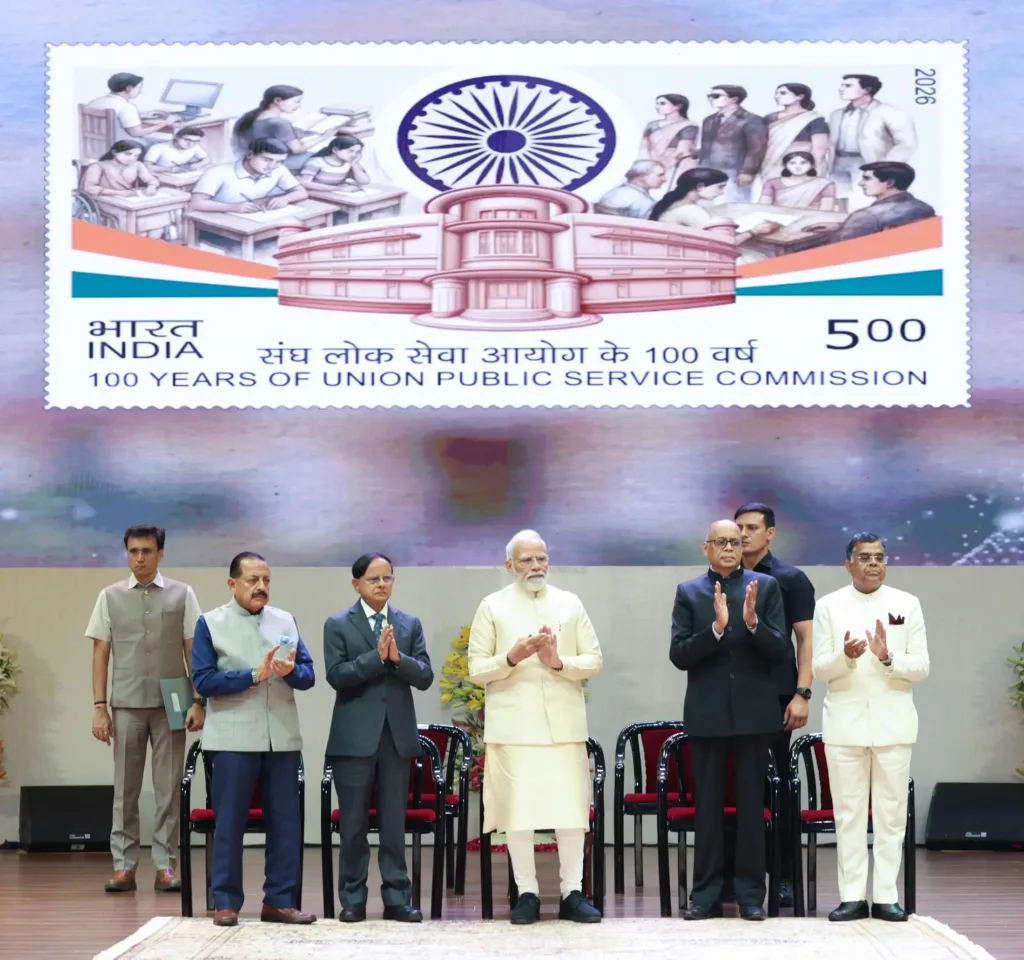
| 2026 | UPSC completed 100 years of its institutional history dating from 1 October 1926. |
Historical note: The year 1926 marks the origin of the institution, whereas 1950 marks its emergence as a constitutional body under the Constitution of independent India. Therefore, it is more precise to say that UPSC completed 100 years of its institutional history in 2026, rather than suggesting that it has been a constitutional body for 100 years.
Reference: UPSC – Historical Perspective and Press Information Bureau – A Century of Meritocracy and Inclusion (2026).
Constitutional Status of UPSC
The Union Public Service Commission is a constitutional body established under Article 315 of the Constitution of India. Its constitutional provisions are contained in Part XIV, Chapter II (Articles 315–323), which deals specifically with Public Service Commissions for the Union and the States.
These provisions establish the institutional framework of UPSC and deal with its composition, appointment of members, tenure, removal, functions, financial independence and reporting responsibilities.
The constitutional safeguards are designed to promote the independence and impartiality of the Commission in carrying out its recruitment and advisory responsibilities.
Constitutional Articles 315 to 323
| Article | Subject | Explanation |
|---|---|---|
| 315 | Public Service Commissions for the Union and the States | Provides for a Public Service Commission for the Union and each State and permits the establishment of a Joint State Public Service Commission. |
| 316 | Appointment and term of office of members | Deals with the appointment of the Chairman and members, their tenure, age limits, resignation and reappointment. |
| 317 | Removal and suspension of a member | Prescribes the constitutional procedure for the removal and suspension of the Chairman or other members of a Public Service Commission. |
| 318 | Regulations concerning conditions of service | Empowers the President to determine the number of members and their conditions of service and to make provisions regarding Commission staff. |
| 319 | Prohibition on holding certain offices after ceasing to be a member | Prescribes restrictions on further government employment for former Chairmen and members of Public Service Commissions. |
| 320 | Functions of Public Service Commissions | Specifies the principal examination, recruitment, consultation and advisory functions of the Commission. |
| 321 | Power to extend functions | Allows Parliament or a State Legislature to extend the functions of a Public Service Commission through legislation. |
| 322 | Expenses of Public Service Commissions | Provides that the expenses of the Commission are charged on the Consolidated Fund of India or the respective State. |
| 323 | Reports of Public Service Commissions | Requires the Commission to submit an annual report and provides for placing the report and explanatory memorandum before Parliament or the State Legislature. |
Article 315: Public Service Commissions for the Union and the States
Article 315 provides for the establishment of a Public Service Commission for the Union and a Public Service Commission for each State.
It also recognises the possibility of establishing a Joint State Public Service Commission for two or more States. Such a commission may be created when the concerned State Legislatures pass the necessary resolutions and Parliament enacts a law providing for its establishment.
Further, the Union Public Service Commission may, with the approval of the President, agree to serve all or any of the needs of a State if requested by the Governor of that State.
Thus, Article 315 establishes the constitutional framework for Union, State and Joint State Public Service Commissions.
Article 316: Appointment and Term of Office of Members
Article 316 deals with the appointment, tenure and eligibility conditions of the Chairman and members of Public Service Commissions.
- Appointment: The Chairman and other members of the Union Public Service Commission are appointed by the President of India.
- Administrative experience: As nearly as may be, one-half of the members of every Public Service Commission should be persons who have held office for at least ten years under the Government of India or a State Government at the time of their appointment.
- Tenure: A member of UPSC holds office for a term of six years from the date of entering office or until attaining the age of 65 years, whichever is earlier.
- Resignation: A member may resign by submitting a written resignation addressed to the President.
- Reappointment: A person who has held office as a member of a Public Service Commission is not eligible for reappointment to that office after the expiration of the term.
Article 316 also provides for an acting arrangement when the office of the Chairman becomes vacant or the Chairman is unable to discharge the duties of the office. The President may appoint one of the other members to perform those duties until the vacancy is filled or the Chairman resumes office.
Article 317: Removal and Suspension of Members
Article 317 provides constitutional safeguards concerning the removal and suspension of the Chairman or other members of a Public Service Commission.
The President has the authority to remove the Chairman or any other member of UPSC. However, the grounds and procedures for removal are constitutionally prescribed.
Removal on grounds of misbehaviour: If the President considers that the Chairman or a member should be removed on the ground of misbehaviour, the matter must be referred to the Supreme Court for an inquiry. The Supreme Court conducts the inquiry and reports its findings to the President. If the Supreme Court reports that the person should be removed on the ground of misbehaviour, the President may issue an order of removal.
For the purposes of this Article, misbehaviour also includes certain situations involving improper interest or participation in contracts or agreements made by or on behalf of the Government of India or a State Government.
Other grounds for removal: The President may also remove a member without the Supreme Court inquiry prescribed for the misbehaviour procedure if the member:
- Is adjudged an insolvent.
- Engages during the term of office in any paid employment outside the duties of the office.
- Is, in the opinion of the President, unfit to continue in office by reason of infirmity of mind or body.
Suspension: The President may suspend the Chairman or a member of UPSC while a reference concerning removal on the ground of misbehaviour is pending before the Supreme Court. The President may also make such an order when the Supreme Court reports that the person should be removed.
These safeguards are intended to prevent arbitrary removal and protect the independence of the Commission.
Article 318: Regulations Regarding Conditions of Service
Article 318 empowers the President to determine the number of members of the Union Public Service Commission and prescribe their conditions of service. It also empowers the President to make provisions regarding the number of members of staff and their conditions of service.
An important safeguard under this Article is that the conditions of service of a member of a Public Service Commission cannot be varied to the member’s disadvantage after appointment.
This provision helps protect the service conditions of the Commission’s members from arbitrary changes during their tenure.
Article 319: Restrictions on Further Employment
Article 319 prescribes restrictions on the future employment of the Chairman and members of Public Service Commissions after they cease to hold office.
The principal restrictions applicable to the Union Public Service Commission are:
- Chairman of UPSC: After ceasing to hold office, the Chairman of UPSC is not eligible for further employment under the Government of India or any State Government.
- Other members of UPSC: A member of UPSC is eligible to become the Chairman of UPSC or the Chairman of a State Public Service Commission, but is not eligible for any other employment under the Government of India or a State Government.
Article 319 also prescribes corresponding restrictions for the Chairmen and members of State Public Service Commissions.
The purpose of these restrictions is to reduce the possibility of personal or professional considerations influencing the functioning of Commission members during their tenure.
Article 320: Functions of Public Service Commissions
Article 320 is one of the most important constitutional provisions relating to UPSC because it specifies the principal functions and responsibilities of the Commission.
Under this Article, the Union Public Service Commission is responsible for conducting examinations for appointments to the services of the Union. It is also required to assist two or more States in framing and operating joint recruitment schemes for services requiring candidates with special qualifications, if requested by those States.
The Commission is also to be consulted on specified matters relating to recruitment, appointments, promotions, transfers and disciplinary proceedings involving persons serving in a civil capacity under the Union or State Governments.
These matters include:
- Methods of recruitment to civil services and civil posts.
- Principles to be followed in making appointments to civil services and posts.
- Principles governing promotions and transfers from one service to another.
- Suitability of candidates for appointments, promotions and transfers.
- Disciplinary matters affecting persons serving under the Government of India or State Governments in a civil capacity.
- Claims relating to legal expenses incurred by government servants in defending legal proceedings concerning acts performed in the execution of their official duties.
- Claims for awards of compensation or pension for injuries sustained by persons while performing official duties.
The proviso to Article 320(3) also permits the President, in relation to services and posts under the Union, to make regulations specifying matters in which consultation with the Commission is not necessary. Therefore, consultation with UPSC is not compulsory in every recruitment or personnel-related matter without exception.
Article 320 also provides that the President may make regulations specifying the extent to which the advice of the Commission is to be followed and that such regulations must be laid before each House of Parliament for the prescribed period.
Article 321: Power to Extend Functions
Article 321 empowers Parliament or a State Legislature, as applicable, to extend the functions of a Public Service Commission through legislation.
Such legislation may provide for the Commission to perform additional functions relating to services of a local authority, a body corporate constituted by law or a public institution.
Accordingly, the functions of UPSC are not necessarily confined to the services and posts directly under the Union Government. They may be extended to other legally constituted organisations where the relevant legislation provides for such an arrangement.
Article 322: Expenses of Public Service Commissions
Article 322 provides financial safeguards for Public Service Commissions. The expenses of the Union Public Service Commission, including salaries, allowances and pensions payable to or in respect of its members and staff, are charged on the Consolidated Fund of India.
Since these expenses are charged on the Consolidated Fund of India, they are not subject to the annual voting process of the Lok Sabha as voted expenditure, although they may be discussed in Parliament in accordance with the constitutional framework.
This arrangement is intended to provide a degree of financial independence to the Commission.
Article 323: Reports of Public Service Commissions
Article 323 requires the Union Public Service Commission to submit an annual report to the President of India regarding the work performed by the Commission.
After receiving the report, the President must cause a copy of it, together with a memorandum explaining cases in which the advice of the Commission was not accepted and the reasons for such non-acceptance, to be laid before each House of Parliament.
This provision creates a mechanism of parliamentary accountability and transparency regarding the Commission’s activities and the Government’s decisions on its advice.
The corresponding provision for State Public Service Commissions requires their annual reports to be submitted to the respective Governors and placed before the State Legislatures along with the relevant explanatory memorandum.
Official reference: UPSC – Constitutional Provisions | Constitution of India – Legislative Department (PDF).
Composition of the Union Public Service Commission
The Union Public Service Commission consists of a Chairman and other members appointed by the President of India. The Constitution does not prescribe a fixed number of members for the Commission.
Under Article 318, the President has the authority to determine the number of members and their conditions of service through regulations.
The Commission’s composition is intended to bring administrative experience and institutional expertise into its functioning. Article 316 provides that, as nearly as may be, one-half of its members should have held office for at least ten years under the Government of India or a State Government at the time of their appointment.
Appointment of the Chairman and Members
The Chairman and other members of UPSC are appointed by the President of India under Article 316 of the Constitution.
The Constitution does not specify a detailed selection procedure for these appointments. The number of members and their service conditions are governed by the applicable regulations under Article 318.
Tenure of the Chairman and Members
Under Article 316, the Chairman and members of UPSC hold office for a term of six years or until they attain the age of 65 years, whichever is earlier.
They may also resign by submitting a written resignation addressed to the President. They are subject to the constitutional provisions concerning removal under Article 317.
Independence of the Commission
The Constitution provides several safeguards to maintain the independence and impartiality of Public Service Commissions. These include:
- Appointment of the Chairman and members by the President.
- Security of tenure, subject to the provisions of the Constitution.
- A prescribed constitutional procedure for removal.
- Protection against disadvantageous changes in service conditions after appointment.
- Restrictions on further government employment after leaving office.
- Expenses charged on the Consolidated Fund of India.
- Submission of annual reports to the President and placement of reports before Parliament.
Together, these safeguards seek to ensure that the Commission can discharge its recruitment and advisory responsibilities independently and impartially.
Functions and Responsibilities of UPSC
The principal functions of UPSC are specified under Article 320 of the Constitution. The Commission performs several recruitment-related and advisory functions for the Union Government and, where legally authorised, other public authorities.
The major functions of UPSC are explained below.
1. Conducting Competitive Examinations
One of the most prominent responsibilities of UPSC is conducting examinations for recruitment to various services of the Union Government.
These examinations provide a structured and competitive mechanism for selecting candidates on the basis of prescribed eligibility requirements, examination performance and applicable recruitment rules.
Some of the major examinations conducted by UPSC include:
- Civil Services Examination (CSE).
- Indian Forest Service Examination (IFoS).
- Engineering Services Examination (ESE).
- Combined Defence Services Examination (CDS).
- National Defence Academy and Naval Academy Examination (NDA & NA).
- Combined Medical Services Examination (CMS).
- Central Armed Police Forces (Assistant Commandants) Examination.
- Indian Economic Service and Indian Statistical Service Examination.
- Combined Geo-Scientist Examination.
The examinations are conducted according to the respective examination rules notified by the Government of India. The Commission publishes notifications, receives applications, conducts examinations and recommends candidates in accordance with the applicable rules.
2. Direct Recruitment through Selection and Interviews
UPSC also undertakes direct recruitment to various government posts through selection procedures that may involve interviews, recruitment tests or other prescribed methods.
These recruitment exercises are generally undertaken on the basis of requisitions received from concerned ministries and departments. The selection method depends on the nature of the post, prescribed qualifications and applicable recruitment rules.
Such recruitment is distinct from the large competitive examinations conducted by the Commission.
3. Recruitment through Promotion
UPSC performs functions relating to the promotion of eligible government officers to higher posts and services, wherever consultation with the Commission is required under the Constitution, applicable laws or recruitment rules.
The Commission participates in Departmental Promotion Committee (DPC) processes and examines matters relating to the suitability of eligible officers for promotion in accordance with the prescribed rules and procedures.
4. Recruitment through Deputation and Absorption
UPSC also performs functions relating to appointments through deputation and absorption in various government services and posts, wherever its consultation is required.
Deputation generally involves the temporary placement of an officer from one government department or organisation to another, subject to the applicable rules. Absorption refers to the permanent appointment of an officer to a post or organisation under the prescribed conditions.
5. Framing and Amendment of Recruitment Rules
Recruitment Rules prescribe the conditions and procedures governing appointments to government posts. They generally specify matters such as the classification of the post, pay level, method of recruitment, qualifications, age limits and other eligibility requirements.
Under Article 320, UPSC is consulted on matters relating to methods of recruitment to civil services and civil posts. It also performs functions relating to the framing and amendment of Recruitment Rules for various services and posts, subject to applicable exemptions and rules.
6. Advising the Government on Disciplinary Matters
UPSC is consulted on specified disciplinary matters involving persons serving under the Government of India or a State Government in a civil capacity.
Such matters may include disciplinary proceedings and other issues prescribed under the Constitution and applicable regulations.
The purpose of this function is to provide an independent advisory mechanism in matters concerning disciplinary action against government employees.
7. Advising the Government on Other Matters
UPSC may also advise the Government on matters referred to it by the President of India and on other matters falling within its constitutional and legally extended functions.
The Commission’s advisory responsibilities are intended to support fair and consistent personnel administration within the public services.
Important clarification: The requirement to consult UPSC does not mean that every recommendation of the Commission is automatically binding on the Government in every matter. The constitutional framework also provides for exceptions to consultation and requires the Government to explain cases of non-acceptance of its advice through the reporting mechanism under Article 323.
Examinations Conducted by UPSC
UPSC conducts several examinations for recruitment to different services and posts under the Union Government. These examinations cater to a wide range of administrative, defence, engineering, medical, scientific, economic and other professional requirements.
Some of the major examinations conducted by the Commission are listed below.
| Examination | Purpose / Major recruitment area |
|---|---|
| Civil Services Examination | Recruitment to the Indian Administrative Service, Indian Police Service, Indian Foreign Service and other notified civil services. |
| Indian Forest Service Examination | Recruitment to the Indian Forest Service. |
| Engineering Services Examination | Recruitment to specified engineering services and posts in the Government of India. |
| Combined Defence Services Examination | Selection of candidates for specified officer-training academies of the Armed Forces. |
| National Defence Academy and Naval Academy Examination | Admission to the National Defence Academy and Indian Naval Academy through the prescribed selection process. |
| Combined Medical Services Examination | Recruitment to specified medical services and posts. |
| Central Armed Police Forces (Assistant Commandants) Examination | Recruitment to Assistant Commandant posts in specified Central Armed Police Forces. |
| Indian Economic Service Examination | Recruitment to the Indian Economic Service. |
| Indian Statistical Service Examination | Recruitment to the Indian Statistical Service. |
| Combined Geo-Scientist Examination | Recruitment to specified geoscientific services and posts. |
The list is indicative and may change according to the examination calendar, recruitment requirements and notifications issued by UPSC.
For the complete and updated list, refer to the official UPSC Examination section.
UPSC Headquarters and Secretariat
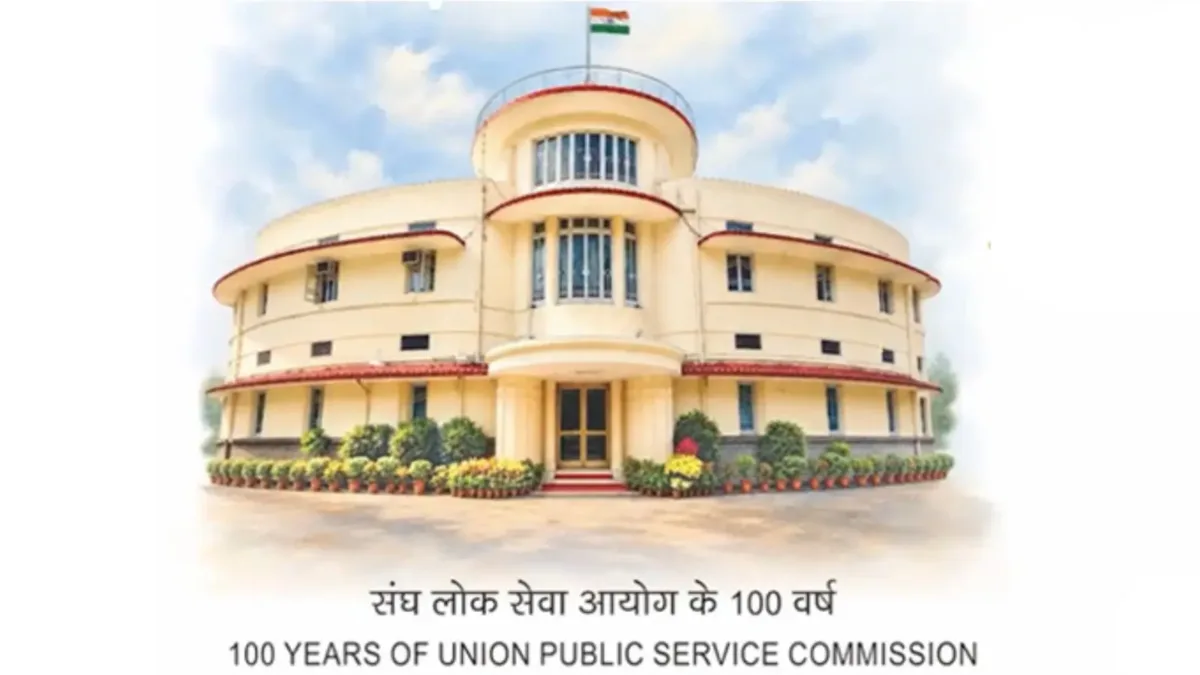
The headquarters of the Union Public Service Commission is located at Dholpur House, Shahjahan Road, New Delhi – 110069.
The present headquarters building has an interesting historical background. Dholpur House was originally constructed in 1920 as the residence of Maharaja Rana Udaybhanu Singh of the erstwhile Dholpur State. Following Independence, it became government property and was designated as the Commission’s headquarters in 1952.
The UPSC Secretariat assists the Commission in carrying out its constitutional and administrative responsibilities. It supports the organisation of examinations, recruitment processes, selection procedures, promotion and deputation-related work and other institutional functions.
The Commission operates through different divisions and branches dealing with examinations, recruitment, recruitment rules, promotions, deputation and other administrative matters.
Official address:
Union Public Service Commission
Dholpur House, Shahjahan Road
New Delhi – 110069
Difference Between UPSC and State Public Service Commissions
India has a federal administrative structure with recruitment requirements at both the Union and State levels. Accordingly, the Constitution provides for a Union Public Service Commission and separate State Public Service Commissions.
Although both institutions perform similar recruitment and advisory functions within their respective jurisdictions, they differ in their areas of responsibility and appointing authorities.
| Basis | UPSC | State Public Service Commission |
|---|---|---|
| Full form | Union Public Service Commission | State Public Service Commission |
| Constitutional provision | Article 315 | Article 315 |
| Jurisdiction | Union Government and other legally authorised bodies | Respective State Government and other legally authorised bodies |
| Appointing authority | President of India | Governor of the State |
| Major recruitment responsibilities | Union civil services and other notified posts | State civil services and other notified State posts |
| Examples of examinations | Civil Services Examination, Engineering Services Examination, CDS and NDA | State Civil Services and other State-level recruitment examinations |
| Retirement age of members | 65 years or six years of tenure, whichever is earlier | 62 years or six years of tenure, whichever is earlier |
| Annual report submitted to | President of India | Governor of the State |
Articles 315 to 323 provide the common constitutional framework for both Union and State Public Service Commissions, while their respective jurisdictions and responsibilities differ.
Importance of UPSC in Indian Administration
The Union Public Service Commission plays an important role in India’s administrative and governance framework. Its constitutional position and recruitment responsibilities contribute to the development of a professional and merit-based public service system.
The importance of UPSC can be understood through the following points:
- Merit-based recruitment: It provides a competitive mechanism for selecting suitable candidates for various public services and posts.
- Administrative impartiality: Its constitutional safeguards are intended to protect recruitment processes from undue external influence.
- Professional civil services: It contributes to the recruitment of officers with the qualifications, abilities and aptitude required for public administration.
- Equal opportunity: Open competitive recruitment provides eligible candidates from different regions and backgrounds an opportunity to compete under the prescribed rules.
- Institutional accountability: Its annual reporting mechanism under Article 323 provides an avenue for parliamentary scrutiny of the Commission’s work and cases in which its advice is not accepted.
- Administrative efficiency: Its recruitment, selection and advisory functions support the staffing and personnel-management requirements of government institutions.
Frequently Asked Questions about UPSC
1. What is the full form of UPSC?
UPSC stands for Union Public Service Commission. It is an independent constitutional body responsible for conducting examinations and performing recruitment-related and advisory functions for various services and posts under the Union Government.
2. Is UPSC a constitutional body?
Yes. UPSC is a constitutional body established under Article 315 of the Constitution of India. Its functions and other institutional provisions are covered under Articles 315 to 323 of Part XIV.
3. When was UPSC established?
The institutional origin of UPSC dates back to 1 October 1926, when the first Public Service Commission was established in British India. It became the Union Public Service Commission with the commencement of the Constitution on 26 January 1950.
4. Who was the first Chairman of UPSC?
Sir Ross Barker was the first Chairman of the Public Service Commission established in India on 1 October 1926. The institution later evolved into the Federal Public Service Commission and subsequently the Union Public Service Commission.
5. Under which Article of the Constitution was UPSC established?
UPSC is established under Article 315 of the Constitution of India. Articles 315 to 323 collectively provide the constitutional framework governing the Commission.
6. Who appoints the Chairman of UPSC?
The Chairman of the Union Public Service Commission is appointed by the President of India under Article 316 of the Constitution.
7. What is the tenure of the UPSC Chairman?
The Chairman holds office for six years from the date of entering office or until attaining the age of 65 years, whichever is earlier.
8. What are the major functions of UPSC?
The major functions include conducting examinations for Union services, direct recruitment through selection and interviews, participation in promotion and deputation processes, consultation on recruitment rules and advising the Government on specified disciplinary and personnel-related matters.
9. How many members are there in UPSC?
The Constitution does not prescribe a fixed number of members. Under Article 318, the President determines the number of members through regulations. The Commission consists of a Chairman and other members.
10. Where is the headquarters of UPSC located?
The headquarters of UPSC is located at Dholpur House, Shahjahan Road, New Delhi – 110069.
11. Is UPSC responsible for conducting only the Civil Services Examination?
No. UPSC conducts several other examinations, including the Indian Forest Service, Engineering Services, Combined Defence Services, National Defence Academy and Naval Academy, Combined Medical Services and Central Armed Police Forces (Assistant Commandants) examinations.
12. What is the difference between UPSC and a State Public Service Commission?
UPSC performs recruitment and advisory functions relating primarily to Union services and posts, whereas a State Public Service Commission performs corresponding functions relating to services and posts under its respective State Government. Both are provided for under Article 315 of the Constitution.
13. Can the UPSC Chairman or a member be removed?
Yes. Article 317 prescribes the procedure for removal. In cases involving alleged misbehaviour, the matter must be referred to the Supreme Court for inquiry. The President may also remove a member on specified grounds such as insolvency, paid employment outside official duties or infirmity of mind or body.
14. Are the recommendations of UPSC binding on the Government?
UPSC performs constitutional advisory functions. Consultation is required in the matters specified under Article 320, subject to applicable exemptions. The constitutional framework also provides for reporting cases in which its advice is not accepted, together with the reasons, under Article 323. Therefore, its advice should not be confused with an automatically binding decision in every matter.
15. Which constitutional Articles deal with UPSC?
Articles 315 to 323 of Part XIV, Chapter II of the Constitution of India deal with Public Service Commissions for the Union and the States. These Articles cover establishment, appointment, tenure, removal, functions, expenses and annual reports.
References and Official Sources
The following primary and government sources may be consulted for further information about the history, constitutional provisions and functions of the Union Public Service Commission.
- Union Public Service Commission – About UPSC. Official institutional history and background.
- UPSC – Constitutional Provisions. Articles 315 to 323.
- UPSC – Functions. Constitutional functions and responsibilities.
- UPSC – Recruitment Rules. Information on recruitment rules and consultation with the Commission.
- UPSC – Frequently Asked Questions. Official explanations concerning constitutional functions and recruitment.
- Legislative Department, Ministry of Law and Justice. Official constitutional and legislative publications.
- Press Information Bureau – A Century of Meritocracy and Inclusion (2026). Historical milestones and the centenary account of UPSC.
Editorial note: This article is intended as an institutional reference on the Union Public Service Commission. Constitutional provisions and institutional history have been explained with reference to official government publications. Readers should consult the latest UPSC notifications, applicable recruitment rules and the Constitution for authoritative information on specific examinations and recruitment procedures.
Multiple Choice Questions (MCQs) on the Union Public Service Commission (UPSC)
Question 1. The Union Public Service Commission (UPSC) is a constitutional body established under which Article of the Constitution of India?
(a) Article 312
(b) Article 315
(c) Article 320
(d) Article 323
Answer: (b) Article 315
Explanation: Article 315 provides for the establishment of a Public Service Commission for the Union and a Public Service Commission for each State. It also provides for the establishment of a Joint State Public Service Commission for two or more States.
Question 2. The constitutional provisions relating to Public Service Commissions are contained in which Part of the Constitution of India?
(a) Part XII
(b) Part XIII
(c) Part XIV
(d) Part XV
Answer: (c) Part XIV
Explanation: Articles 315 to 323 are contained in Part XIV of the Constitution, under Chapter II, which deals specifically with Public Service Commissions for the Union and the States.
Question 3. When was the first Public Service Commission established in India?
(a) 1 October 1926
(b) 1 April 1935
(c) 1 April 1937
(d) 26 January 1950
Answer: (a) 1 October 1926
Explanation: The first Public Service Commission in India was established on 1 October 1926. It was constituted as an advisory body under the chairmanship of Sir Ross Barker.
Question 4. Who was the first Chairman of the Public Service Commission established in India in 1926?
(a) Lord Lee of Fareham
(b) Sir Ross Barker
(c) Lord Macaulay
(d) Sir William Beveridge
Answer: (b) Sir Ross Barker
Explanation: Sir Ross Barker was appointed as the first Chairman of the Public Service Commission established on 1 October 1926. The Commission initially had limited advisory functions.
Question 5. Consider the following statements about the Lee Commission:
1. It was appointed in 1923 under the chairmanship of Lord Lee of Fareham.
2. It submitted its report in 1924.
3. It recommended the establishment of a Public Service Commission in India.
Which of the statements given above are correct?
(a) 1 and 2 only
(b) 2 and 3 only
(c) 1 and 3 only
(d) 1, 2 and 3
Answer: (d) 1, 2 and 3
Explanation: The Royal Commission on the Superior Civil Services in India, popularly known as the Lee Commission, was appointed in 1923 under Lord Lee of Fareham. It submitted its report in 1924 and recommended the establishment of a Public Service Commission, which led to the establishment of the first Commission in 1926.
Question 6. Which of the following provisions of the Government of India Act, 1919 provided for the establishment of a Public Service Commission in India?
(a) Section 24
(b) Section 48
(c) Section 96C
(d) Section 264
Answer: (c) Section 96C
Explanation: Section 96C of the Government of India Act, 1919 provided for the establishment of a Public Service Commission in India. The Commission was subsequently established on 1 October 1926.
Question 7. Consider the following statements regarding the Federal Public Service Commission:
1. The Government of India Act, 1935 provided for the establishment of a Federal Public Service Commission.
2. The relevant provisions of the Act came into force on 1 April 1937.
3. The Public Service Commission at the Centre became the Federal Public Service Commission in 1937.
Which of the statements given above are correct?
(a) 1 and 2 only
(b) 2 and 3 only
(c) 1 and 3 only
(d) 1, 2 and 3
Answer: (d) 1, 2 and 3
Explanation: The Government of India Act, 1935 provided for a Federal Public Service Commission and Provincial Public Service Commissions. The relevant provisions came into force on 1 April 1937, when the Central Public Service Commission became the Federal Public Service Commission.
Question 8. When did the Federal Public Service Commission become the Union Public Service Commission?
(a) 15 August 1947
(b) 26 January 1950
(c) 26 November 1949
(d) 1 October 1952
Answer: (b) 26 January 1950
Explanation: With the commencement of the Constitution of India on 26 January 1950, the Federal Public Service Commission became the Union Public Service Commission and acquired constitutional status.
Question 9. Which of the following pairs of constitutional Articles and their respective provisions are correctly matched?
1. Article 315 — Public Service Commissions for the Union and the States
2. Article 316 — Appointment and term of office of members
3. Article 317 — Removal and suspension of members
4. Article 320 — Functions of Public Service Commissions
Select the correct answer using the code given below:
(a) 1 and 2 only
(b) 1, 2 and 3 only
(c) 2, 3 and 4 only
(d) 1, 2, 3 and 4
Answer: (d) 1, 2, 3 and 4
Explanation: All four pairs are correctly matched. Articles 315 to 323 deal with different aspects of Public Service Commissions, including their establishment, appointment, removal, functions, expenses and annual reports.
Question 10. Who appoints the Chairman and members of the Union Public Service Commission?
(a) The Prime Minister
(b) The President of India
(c) The Chief Justice of India
(d) The Union Minister of Personnel
Answer: (b) The President of India
Explanation: Under Article 316, the Chairman and other members of the Union Public Service Commission are appointed by the President of India. The Chairman and members of a State Public Service Commission are appointed by the Governor of the State.
Question 11. Under Article 316 of the Constitution, approximately what proportion of the members of a Public Service Commission should have held government office for at least ten years?
(a) One-fourth
(b) One-third
(c) One-half
(d) Two-thirds
Answer: (c) One-half
Explanation: Article 316 provides that, as nearly as may be, one-half of the members of every Public Service Commission should be persons who have held office for at least ten years under the Government of India or the Government of a State at the time of their appointment.
Question 12. What is the maximum age up to which the Chairman or a member of the Union Public Service Commission can hold office?
(a) 60 years
(b) 62 years
(c) 65 years
(d) 68 years
Answer: (c) 65 years
Explanation: Under Article 316, a member of the UPSC holds office for six years from the date of entering office or until attaining the age of 65 years, whichever is earlier.
Question 13. Consider the following statements regarding the tenure of members of Public Service Commissions:
1. A member of the UPSC holds office for six years or until attaining the age of 65 years, whichever is earlier.
2. A member of a State Public Service Commission holds office for six years or until attaining the age of 62 years, whichever is earlier.
Which of the statements given above is/are correct?
(a) 1 only
(b) 2 only
(c) Both 1 and 2
(d) Neither 1 nor 2
Answer: (c) Both 1 and 2
Explanation: Article 316 prescribes a six-year term for members of Public Service Commissions. The maximum age is 65 years for the UPSC and 62 years for a State Public Service Commission or Joint State Public Service Commission, whichever is earlier.
Question 14. Which of the following statements regarding the reappointment of a member of a Public Service Commission is correct?
(a) A member can be reappointed for one additional term.
(b) A member can be reappointed with the approval of the President.
(c) A member is ineligible for reappointment to the same office after completing the term.
(d) A member can be reappointed only after a gap of five years.
Answer: (c) A member is ineligible for reappointment to the same office after completing the term.
Explanation: Article 316(3) states that a person who holds office as a member of a Public Service Commission is ineligible for reappointment to that office on the expiration of the term.
Question 15. Which Article of the Constitution deals with the removal and suspension of the Chairman or a member of a Public Service Commission?
(a) Article 316
(b) Article 317
(c) Article 318
(d) Article 319
Answer: (b) Article 317
Explanation: Article 317 deals with the removal and suspension of the Chairman and members of Public Service Commissions. It provides constitutional safeguards to protect the independence of these bodies.
Question 16. In the case of removal of the Chairman or a member of the UPSC on the ground of misbehaviour, whose inquiry is required under Article 317?
(a) Parliament
(b) Central Vigilance Commission
(c) Supreme Court of India
(d) Election Commission of India
Answer: (c) Supreme Court of India
Explanation: Under Article 317, in the case of alleged misbehaviour, the President refers the matter to the Supreme Court. The member can be removed by an order of the President after the Supreme Court conducts an inquiry and reports that the member ought to be removed.
Question 17. Under Article 317, the President may remove the Chairman or a member of a Public Service Commission without the Supreme Court inquiry on which of the following grounds?
1. Being adjudged an insolvent.
2. Engaging in paid employment outside the duties of the office during the term.
3. Being, in the opinion of the President, unfit to continue in office due to infirmity of mind or body.
Select the correct answer using the code given below:
(a) 1 and 2 only
(b) 2 and 3 only
(c) 1 and 3 only
(d) 1, 2 and 3
Answer: (d) 1, 2 and 3
Explanation: Article 317(3) permits the President to remove a member on these three grounds without following the Supreme Court inquiry procedure applicable to removal on the ground of misbehaviour.
Question 18. Which Article empowers the President to determine the number of members of the UPSC and their conditions of service through regulations?
(a) Article 316
(b) Article 317
(c) Article 318
(d) Article 320
Answer: (c) Article 318
Explanation: Article 318 empowers the President, in the case of the UPSC, to make regulations determining the number of members and their conditions of service, as well as the number of staff members and their conditions of service. The conditions of service of a member cannot be varied to their disadvantage after appointment.
Question 19. Which of the following Articles places restrictions on the future employment of the Chairman and members of Public Service Commissions after they cease to hold office?
(a) Article 317
(b) Article 318
(c) Article 319
(d) Article 320
Answer: (c) Article 319
Explanation: Article 319 lays down restrictions on holding further offices after ceasing to be a member or Chairman of a Public Service Commission. These restrictions are intended to protect the independence and impartiality of the Commission.
Question 20. Which of the following is the primary constitutional function of the UPSC under Article 320?
(a) Conducting elections to Parliament
(b) Conducting examinations for appointments to Union services
(c) Framing the Union Budget
(d) Advising the Supreme Court on constitutional matters
Answer: (b) Conducting examinations for appointments to Union services
Explanation: Article 320 makes it the duty of the UPSC to conduct examinations for appointments to the services of the Union. It also provides for consultation with the Commission on specified recruitment, promotion and disciplinary matters.
Question 21. Under Article 320, the UPSC is required to be consulted on which of the following matters?
1. Methods of recruitment to civil services and civil posts.
2. Principles to be followed in making appointments and promotions.
3. Suitability of candidates for appointments, promotions and transfers from one service to another.
Select the correct answer using the code given below:
(a) 1 only
(b) 1 and 2 only
(c) 2 and 3 only
(d) 1, 2 and 3
Answer: (d) 1, 2 and 3
Explanation: Article 320(3) provides for consultation with the UPSC on methods of recruitment, principles governing appointments and promotions, and the suitability of candidates for such appointments, promotions or transfers. The Constitution also permits specified exemptions from consultation.
Question 22. Consider the following matters:
1. Disciplinary matters affecting persons serving under the Government of India in a civil capacity.
2. Claims by or in respect of persons who have served under the Government of India for costs incurred in defending legal proceedings relating to their official duties.
3. Claims for the award of a pension in respect of injuries sustained while serving under the Government of India.
Which of the above matters are covered by the consultation provisions of Article 320?
(a) 1 only
(b) 1 and 2 only
(c) 2 and 3 only
(d) 1, 2 and 3
Answer: (d) 1, 2 and 3
Explanation: Article 320(3) includes disciplinary matters, claims relating to legal expenses incurred in defending proceedings connected with official duties, and claims for the award of pensions in respect of injuries sustained while serving the Government. These are among the matters on which the Commission is to be consulted, subject to applicable constitutional provisions and exemptions.
Question 23. Which of the following statements about consultation with the UPSC is correct?
(a) Consultation with the UPSC is mandatory in every government appointment without exception.
(b) The President may make regulations specifying matters in which consultation with the UPSC is not necessary.
(c) The UPSC can independently appoint all officers to Union services.
(d) The UPSC has the power to make laws relating to recruitment.
Answer: (b) The President may make regulations specifying matters in which consultation with the UPSC is not necessary.
Explanation: The proviso to Article 320(3) empowers the President to make regulations specifying matters in which consultation with a Public Service Commission is not necessary. Therefore, it is incorrect to state that consultation is mandatory in every appointment without exception.
Question 24. Which Article empowers Parliament or a State Legislature to extend the functions of a Public Service Commission to services of a local authority, statutory body or public institution?
(a) Article 319
(b) Article 320
(c) Article 321
(d) Article 322
Answer: (c) Article 321
Explanation: Article 321 empowers Parliament or the State Legislature, as applicable, to extend the functions of the UPSC or a State Public Service Commission to services under a local authority, body corporate constituted by law or public institution.
Question 25. The expenses of the Union Public Service Commission are charged on which of the following?
(a) Contingency Fund of India
(b) Consolidated Fund of India
(c) Public Account of India
(d) Finance Commission Fund
Answer: (b) Consolidated Fund of India
Explanation: Under Article 322, the expenses of the UPSC, including salaries, allowances and pensions payable to or in respect of its members and staff, are charged on the Consolidated Fund of India. This financial arrangement is an important safeguard for its independence.
Question 26. Under Article 323, the UPSC submits its annual report on its work to whom?
(a) The Prime Minister
(b) The President of India
(c) The Speaker of the Lok Sabha
(d) The Union Minister of Personnel
Answer: (b) The President of India
Explanation: Article 323 requires the UPSC to submit an annual report on its work to the President. The President then causes the report, along with a memorandum explaining cases where the Commission’s advice was not accepted and the reasons for such non-acceptance, to be laid before each House of Parliament.
Question 27. Consider the following chronological sequence of events relating to the evolution of the Public Service Commission in India:
1. Establishment of the first Public Service Commission.
2. Submission of the Lee Commission Report.
3. Commencement of the Federal Public Service Commission.
4. Constitutional status of the Union Public Service Commission.
Which of the following is the correct chronological sequence?
(a) 2 – 1 – 3 – 4
(b) 1 – 2 – 3 – 4
(c) 2 – 3 – 1 – 4
(d) 3 – 2 – 1 – 4
Answer: (a) 2 – 1 – 3 – 4
Explanation: The Lee Commission submitted its report in 1924. The first Public Service Commission was established in 1926. The Federal Public Service Commission came into operation on 1 April 1937, and the UPSC acquired constitutional status on 26 January 1950.
Question 28. The headquarters of the Union Public Service Commission is located at:
(a) North Block, New Delhi
(b) South Block, New Delhi
(c) Dholpur House, New Delhi
(d) Vigyan Bhawan, New Delhi
Answer: (c) Dholpur House, New Delhi
Explanation: The headquarters of the UPSC is located at Dholpur House on Shahjahan Road in New Delhi.
Question 29. Which of the following examinations is/are conducted by the Union Public Service Commission?
1. Civil Services Examination
2. Combined Defence Services Examination
3. National Defence Academy and Naval Academy Examination
4. Central Armed Police Forces (Assistant Commandants) Examination
Select the correct answer using the code given below:
(a) 1 and 2 only
(b) 1, 2 and 3 only
(c) 2, 3 and 4 only
(d) 1, 2, 3 and 4
Answer: (d) 1, 2, 3 and 4
Explanation: All four are examinations conducted by the UPSC. The Commission conducts several examinations for recruitment to different civil, defence and other services under the Government of India.
Question 30. Consider the following statements about the functions of the Union Public Service Commission:
1. It conducts examinations for recruitment to Union services.
2. It undertakes direct recruitment through selection and interviews.
3. It is consulted on specified matters relating to promotions, deputation and disciplinary proceedings.
4. Its advice is binding on the Government in every matter referred to it.
Which of the statements given above are correct?
(a) 1 and 2 only
(b) 1, 2 and 3 only
(c) 2, 3 and 4 only
(d) 1, 2, 3 and 4
Answer: (b) 1, 2 and 3 only
Explanation: The UPSC conducts examinations, makes direct recruitment through selection and interviews, and performs advisory functions relating to promotions, deputation, recruitment rules and disciplinary matters. Its advice is generally advisory and is not binding on the Government in every matter. Under Article 323, cases where its advice is not accepted must be accompanied by reasons in the memorandum laid before Parliament.