
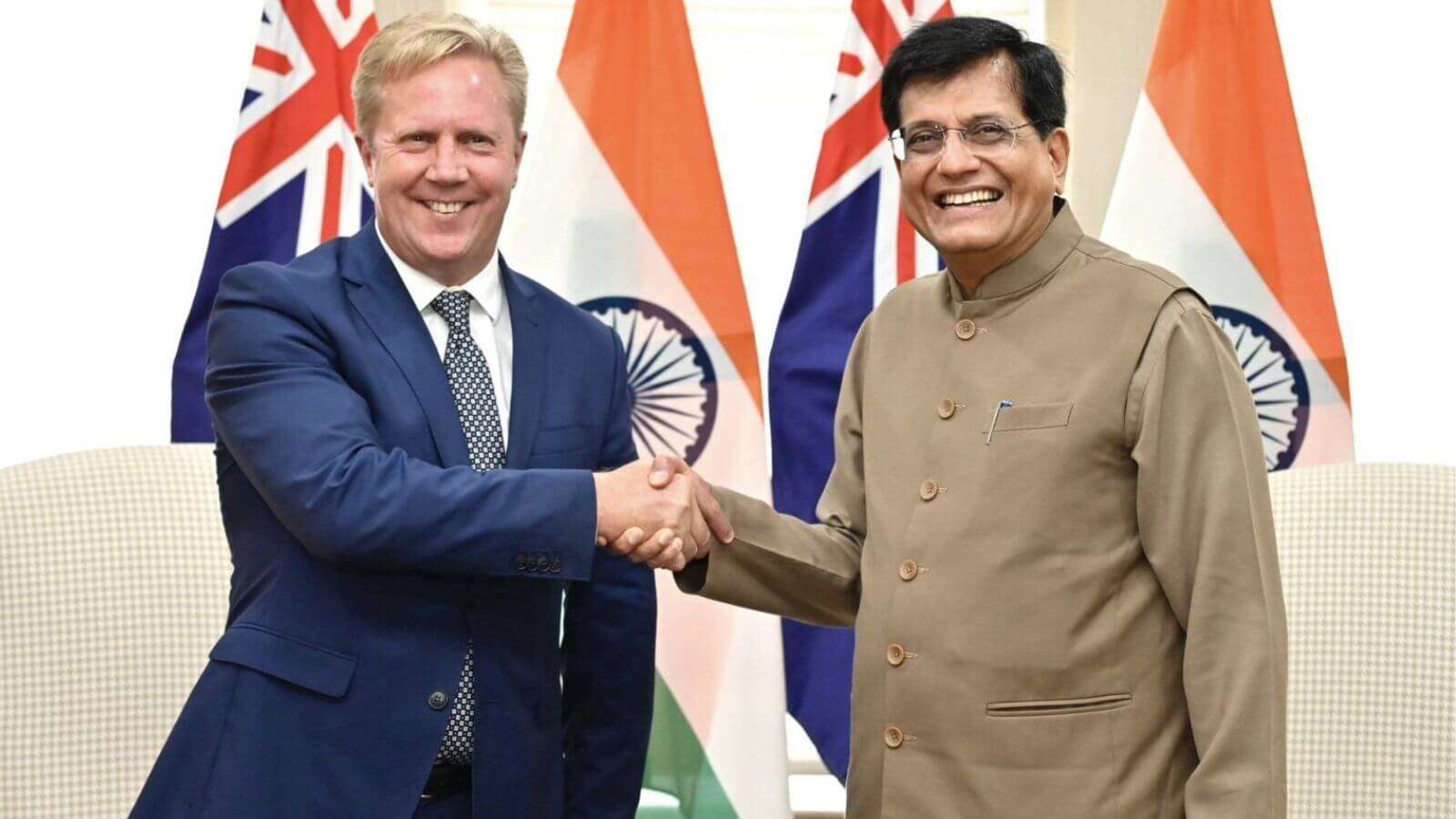
India’s decision to resume negotiations for a Free Trade Agreement (FTA) with New Zealand comes at a time when global trade is being reshaped by geopolitics, supply-chain disruptions, and a gradual retreat from unfettered globalization. While the economic size of New Zealand may seem modest compared to India’s other trade partners, the strategic value of this engagement goes well beyond headline trade numbers.
Table of Contents
A Changing Global Trade Context
Over the past decade, India has recalibrated its trade policy. It stayed out of the Regional Comprehensive Economic Partnership (RCEP), reviewed several bilateral agreements, and began negotiating FTAs that better align with domestic economic priorities. Recent agreements with the UAE, Australia, and progress with the UK reflect this more cautious but strategic approach.
Against this backdrop, New Zealand represents a partner that is politically stable, economically complementary, and aligned with rules-based trade — an increasingly valuable combination in a fragmented global order.
Why New Zealand Matters to India
At first glance, India–New Zealand trade volumes are relatively small. However, trade agreements are not only about current volumes; they are about future positioning.
New Zealand is a major exporter of dairy products, agricultural technology, and food processing expertise. India, on the other hand, offers a vast market, strengths in pharmaceuticals, information technology, education services, and skilled manpower. An FTA could unlock synergies in areas where tariff and non-tariff barriers currently limit deeper engagement.
Equally important is New Zealand’s integration into the Indo-Pacific economic architecture. Stronger economic ties reinforce India’s broader regional strategy in the Indo-Pacific, complementing diplomatic and security partnerships.
Agriculture and the Dairy Sensitivity
Agriculture, particularly dairy, remains the most sensitive aspect of the negotiations. India’s dairy sector supports millions of small farmers and cooperatives, making it politically and economically sensitive to foreign competition.
Any FTA with New Zealand is therefore unlikely to involve unrestricted dairy imports. Instead, negotiators are expected to explore calibrated market access, safeguard mechanisms, and longer transition periods. This reflects India’s evolving FTA model — one that seeks balance between market openness and livelihood protection.
Services, Education, and Skilled Mobility
Where the agreement could gain momentum is in services. India’s strength in IT, professional services, and healthcare aligns well with New Zealand’s demand for skilled workers. Easier mobility, recognition of qualifications, and cooperation in education could become central pillars of the agreement.
For Indian students and professionals, this could translate into clearer pathways for education, employment, and collaboration, while New Zealand benefits from addressing skill shortages in key sectors.
Strategic Significance Beyond Trade
Beyond economics, the FTA has diplomatic and strategic implications. New Zealand is a vocal supporter of a free, open, and rules-based Indo-Pacific. Deepening economic ties adds substance to this shared outlook and enhances India’s credibility as a reliable economic partner in the region.
It also signals India’s willingness to engage selectively but constructively with developed economies, shaping trade rules rather than merely reacting to them.
Challenges Ahead
Despite mutual intent, negotiations will not be easy. Differences over agricultural access, intellectual property standards, and environmental provisions will require careful navigation. India’s experience with earlier FTAs has made policymakers more cautious, and domestic stakeholder consultations are likely to shape the final contours of any agreement.
Why This FTA Matters Now
The renewed push for an India–New Zealand FTA reflects a broader shift in India’s trade diplomacy — from defensive disengagement to calibrated engagement. If concluded thoughtfully, the agreement could serve as a template for future FTAs that combine economic opportunity with strategic restraint.
In a world where trade is increasingly intertwined with geopolitics, the significance of this FTA lies not just in what is traded, but in how India positions itself in the evolving global economic order.
Also check India UK Free Trade Agreement FTA