The Union Public Service Commission (UPSC) Civil Services Examination (CSE) has undergone several important changes since the introduction of the modern three-stage examination system. These reforms have affected the structure of the Preliminary Examination, the number and nature of papers in the Main Examination, the weightage of General Studies, the role of the optional subject, eligibility conditions and the overall examination process.
Some of the most significant reforms took place in 1979, 1993, 2011, 2013 and 2015. Subsequent developments have focused on improving transparency, accessibility, technology and examination administration. The latest initiatives introduced for CSE 2025 and CSE 2026 are also important, although they should not be confused with a fundamental change in the examination pattern.
This article presents a chronological account of the major UPSC Exam Pattern Changes over the years, including important developments before and after 2011.
Major UPSC Exam Pattern Changes: A Quick Timeline
| Year | Major change or development | Nature of change |
|---|---|---|
| 1979 | Three-stage examination system introduced following the Kothari Committee recommendations. | Major structural reform |
| 1989 | Optical Mark Recognition (OMR) technology introduced. | Administrative and technological reform |
| 1993 | Essay paper introduced in Mains and interview marks increased from 250 to 300. | Examination reform |
| 1994 | Medical Science added as an optional subject. | Subject-related change |
| 2000 | Online Recruitment Application system introduced. | Administrative reform |
| 2011 | CSAT introduced and the optional-subject paper in Prelims discontinued. | Major structural reform |
| 2013 | Mains restructured with four General Studies papers and one optional subject. | Major structural reform |
| 2014 | Number of attempts and upper age limit increased for candidates in the General category. | Eligibility reform |
| 2015 | CSAT Paper II made qualifying with a minimum requirement of 33%. | Prelims reform |
| 2018 | Query-Based Marks Information System introduced. | Transparency and administrative reform |
| 2025 | Consolidated Question Paper-cum-Answer Booklet introduced for the Mains examination. | Examination-process reform |
| 2026 | Provisional answer key released shortly after Prelims for the first time; candidates can submit representations through QPRep. | Transparency reform |
| 2026 | New application portal, face-recognition measures and examination-centre accessibility reforms announced. | Technology and accessibility reform |
Major UPSC Exam Pattern Changes Before 2011
1. 1979: Introduction of the Three-Stage Civil Services Examination
The year 1979 was a landmark in the history of the Civil Services Examination. Following the recommendations of the Kothari Committee, the Government introduced a common three-stage examination system consisting of:
- Preliminary Examination: An objective-type screening examination.
- Main Examination: A written examination comprising descriptive papers.
- Interview: A personality assessment of candidates who qualified in the written examination.
Before this reform, recruitment examinations for different services followed a different structure. The new arrangement established a common competitive examination framework for recruitment to several civil services.
The original post-Kothari scheme included General Studies and an optional subject in the Preliminary Examination. The Main Examination included compulsory language papers, General Studies and two optional subjects. The Essay paper recommended by the committee was not introduced at that stage.
The introduction of the three-stage system in 1979 remains one of the most fundamental changes in the history of the Civil Services Examination.
2. 1989: Introduction of Optical Mark Recognition (OMR) Technology
UPSC introduced Optical Mark Recognition (OMR) technology in 1989. This was an important technological development in the processing of objective-type examination answer sheets.
OMR technology enabled the Commission to process answer sheets more efficiently and supported the administration of large-scale competitive examinations. This was primarily an administrative and technological reform rather than a change in the syllabus or stages of the Civil Services Examination.
3. 1993: Introduction of the Essay Paper and Changes in Interview Marks
Another important reform took place in 1993 following the review of the examination system associated with the Satish Chandra Committee.
The Essay paper was introduced in the Civil Services Main Examination. The reform gave candidates an opportunity to demonstrate their ability to organise ideas, develop arguments and express their views in a structured manner.
The marks allocated to the Personality Test (Interview) were also increased from 250 to 300. These changes altered the composition and assessment of the written and personality-test stages.
4. 1994: Medical Science Added as an Optional Subject
Medical Science was added to the list of optional subjects in 1994. This expanded the range of subjects available to candidates appearing in the Civil Services Main Examination.
This was a subject-related change rather than a complete restructuring of the examination.
5. 2000: Introduction of Online Recruitment Applications
UPSC began moving towards online application processes around 2000 through its Online Recruitment Application system. The transition towards digital applications gradually reduced dependence on paper-based application procedures.
This development was part of the Commission’s broader administrative modernisation. It did not change the fundamental stages or marking structure of the Civil Services Examination.
Major UPSC Exam Pattern Changes After 2011
6. 2011: Introduction of CSAT in the Preliminary Examination
The Civil Services Preliminary Examination underwent a major restructuring in 2011 following the recommendations of the Professor S.K. Khanna Committee.
Before 2011, the Preliminary Examination consisted of a General Studies paper and an objective-type paper based on an optional subject. Under the revised scheme, the optional-subject paper was discontinued and replaced by a second General Studies paper known as the Civil Services Aptitude Test (CSAT).
The revised Preliminary Examination consisted of two objective-type papers:
- General Studies Paper I: 200 marks.
- General Studies Paper II (CSAT): 200 marks.
Initially, marks obtained in both papers were counted for determining the Preliminary Examination merit list. Consequently, CSAT became an important component of the screening stage.
The introduction of CSAT was one of the most significant changes in the modern history of the Civil Services Examination.
7. 2013: Major Restructuring of the Civil Services Main Examination
The Civil Services Main Examination underwent a substantial restructuring in 2013 following the recommendations of the Professor Arun Nigavekar Committee.
Before this reform, candidates had to select two optional subjects for the Main Examination. The revised scheme reduced the number of optional subjects to one and increased the number of General Studies papers from two to four.
The revised written examination structure included:
- One Essay paper carrying 250 marks.
- Four General Studies papers carrying 250 marks each.
- Two papers of one optional subject, carrying 250 marks each.
- Two qualifying language papers: English and one Indian language.
The four General Studies papers covered a wider range of areas, including Indian heritage and culture, history, geography, society, governance, polity, social justice, international relations, technology, economic development, environment, internal security and disaster management.
A new General Studies Paper IV was introduced, covering Ethics, Integrity and Aptitude. This brought ethical reasoning, integrity and aptitude into the formal assessment structure.
The seven merit-counting written papers carried a total of 1,750 marks. The Personality Test carried 275 marks, making the total marks for final ranking 2,025.
Important amendments to the 2013 examination notification
The original 2013 notification was followed by further modifications announced by the Government on 3 April 2013. These included changes relating to the choice of examination medium, eligibility conditions for selecting literature subjects and the restoration of two qualifying language papers.
The English component of 100 marks that had been included in the Essay paper was removed. Two qualifying papers, one in an Indian language and another in English, carrying 300 marks each, were restored.
These amendments are important when studying the actual 2013 examination scheme. The final arrangement should not be confused with the original notification issued in March 2013.
8. 2014: Increase in Age Limit and Number of Attempts
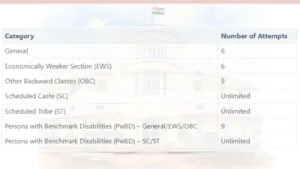
The Government introduced important eligibility-related changes from the Civil Services Examination, 2014.
For candidates belonging to the General category, the maximum permissible age limit was increased from 30 years to 32 years, while the maximum number of attempts was increased from four to six.
The number of attempts and age limits applicable to other categories continued to be governed by their respective rules. The changes were intended to provide candidates with additional opportunities to compete in the examination.
It is important to note that the 2014 reform was primarily an eligibility change. It did not constitute a fundamental restructuring of the Mains examination comparable to the 2013 reform.
9. 2014: Removal of English Comprehension from CSAT
Another change associated with the 2014 Preliminary Examination was the removal of the English language comprehension component from General Studies Paper II.
This change affected the content of the CSAT paper. However, both Preliminary Examination papers continued to contribute to the merit calculation in 2014.
10. 2015: CSAT Made a Qualifying Paper
In 2015, the Government made a significant change to the role of CSAT in the Preliminary Examination.
General Studies Paper II (CSAT) was made a qualifying paper, with candidates required to secure at least 33% marks. Marks obtained in CSAT were no longer counted towards the Preliminary Examination merit list.
Under this arrangement:
- General Studies Paper I: Marks counted towards the Preliminary Examination merit list.
- General Studies Paper II (CSAT): Qualifying in nature, with a minimum requirement of 33%.
This change substantially altered the importance of CSAT in determining whether a candidate qualified for the Main Examination. Candidates still had to clear the qualifying threshold in Paper II, but their ranking at the Preliminary stage was determined by their performance in General Studies Paper I.
11. 2018: Introduction of Query-Based Marks Information System
UPSC introduced the Query-Based Marks Information System in 2018 as part of its efforts to improve transparency and access to examination-related information.
This was an administrative and information-related initiative, not a change in the syllabus, number of papers or selection stages of the Civil Services Examination.
The Query-Based Marks Information System was an interactive digital portal introduced by the Union Public Service Commission (UPSC) on June 1, 2018. Its primary purpose was to digitalize and streamline how candidates accessed their individual exam performances while preserving confidentiality.
Individualized Queries: Instead of manually handling physical mark sheets, candidates could securely access the UPSC portal and pull up their detailed scores by entering specific credentials like their Roll Number, Date of Birth, and Registration ID.
Shift in Public Disclosure: Coinciding with its launch, UPSC adjusted how it shared public data. Starting with the Civil Services Examination (CSE) 2018, public PDFs for recommended candidates only displayed the total written marks, personality test marks, and final totals. The detailed, paper-wise breakups (e.g., individual General Studies and optional papers) were kept behind this personalized query firewall.
Ecosystem Debate: While the system successfully digitized individual report cards, it also triggered pushback from the aspirant community over the years. Because paper-wise scores were no longer public, analyzing broader subject performance and optional paper trends became much more difficult.
Recent Developments: UPSC CSE 2025 and 2026
There have been important developments in the examination process in 2025 and 2026. However, these developments should be distinguished from the major structural reforms of 1979, 2011 and 2013.
12. 2025: Introduction of Consolidated Question Paper-cum-Answer Booklet
For the Civil Services Main Examination 2025, UPSC introduced a consolidated Question Paper-cum-Answer Booklet (QCAB), instead of providing separate question papers and answer booklets.
Under this arrangement, candidates are required to write their answers in the designated space provided below the relevant question or sub-question. Answers written outside the prescribed space are not evaluated, as specified in the examination instructions.
This is an important change in the manner in which candidates write the Main Examination. It affects answer presentation and space management, although it does not change the fundamental number of written papers or the broad examination stages.
13. 2026: New Online Application Portal and Technology-Based Verification
For the Civil Services Examination 2026, UPSC announced a series of technology-related measures intended to improve examination administration, candidate convenience and security.
The major initiatives include:
- Revamped online application portal: A redesigned portal was introduced to simplify the application process and strengthen examination administration.
- Photo verification and face recognition: Technology-enabled identity verification measures were introduced to strengthen the integrity of the examination process.
- Examination-centre accessibility for PwBD candidates: UPSC revised its centre-allocation framework to ensure that candidates with benchmark disabilities are not denied their preferred examination centre because of capacity restrictions.
- Additional Preliminary Examination centres: Meerut, Kanpur and Bhubaneswar were added, taking the total number of Preliminary Examination centres from 80 to 83.
- Additional Main Examination centres: Bhubaneswar, Srinagar and Imphal were added, increasing the number of Mains centres from 24 to 27.
- Candidate preference survey: The application portal allows candidates to indicate nearby preferred cities. The information may help UPSC assess demand for additional examination centres.
These initiatives are important improvements in accessibility, security and examination management. They should not, however, be described as a new Civil Services Examination pattern.
14. 2026: First-Ever Release of Provisional Answer Key Immediately After UPSC Prelims
One of the most significant transparency-related developments in the history of the UPSC Civil Services Examination was introduced in 2026. For the first time, the Union Public Service Commission released the provisional answer key for the Civil Services (Preliminary) Examination shortly after the examination, instead of waiting until the completion of the entire examination cycle.
Under the earlier practice, UPSC generally released the Preliminary Examination answer key only after the completion of the entire Civil Services Examination process, including the Main Examination, Personality Test and declaration of the final result. Consequently, candidates had to wait several months to access the Commission’s official answers.
From the Civil Services Examination 2026 onwards, UPSC has changed this practice by introducing the early publication of provisional answer keys.
Background: Earlier practice of releasing answer keys
Before this reform, candidates could access unofficial answer keys prepared by coaching institutes and subject experts soon after the Preliminary Examination. However, the official UPSC answer key was generally published only after the entire examination process was completed.
For example, the Civil Services Preliminary Examination 2025 was conducted on 25 May 2025. UPSC released its official answer key on 13 May 2026, after the final result of the 2025 examination had been declared. This reflected the Commission’s earlier practice.
What changed from the 2026 examination?
For the Civil Services Preliminary Examination 2026, UPSC introduced the following procedure:
- Early publication of provisional answer key: UPSC would publish the provisional answer key shortly after the Preliminary Examination.
- Opportunity to submit objections: Candidates who appeared in the examination could submit representations against questions or answers they considered incorrect.
- Online submission through QPRep: Representations were to be submitted through the dedicated Online Question Paper Representation Portal (QPRep) available on the UPSC online portal.
- Supporting evidence: Candidates were required to provide a brief explanation and supporting documents from three authentic sources in support of their proposed answers.
- Review by subject experts: The representations received would be examined by teams of subject experts, who would assess the supporting material and provide their considered views.
- Publication of final answer key: The final answer key would be released only after the declaration of the final result of the examination.
First implementation: Civil Services Preliminary Examination 2026
UPSC conducted the Civil Services Preliminary Examination 2026 on 24 May 2026. On 27 May 2026, the Commission released the provisional answer key for the examination. This was the first time that UPSC had released the provisional answer key for the Civil Services Preliminary Examination shortly after the examination.
Candidates were permitted to submit their representations through the QPRep portal up to 6:00 PM on 31 May 2026. The Commission specified that representations should include the candidate’s understanding of the correct answer, a brief explanation and supporting documents from three authentic sources.
Why is this change important?
The early publication of the provisional answer key is a significant step towards greater transparency and accountability in the UPSC examination system. Its major benefits include:
- Greater transparency: Candidates can compare their responses with the Commission’s provisional answers soon after the examination.
- Opportunity to challenge errors: Candidates have a formal opportunity to point out potentially incorrect answers or discrepancies in the question paper.
- Evidence-based review: Representations are supported by documentary references and examined by subject experts.
- Better understanding of performance: Candidates can make an early assessment of their likely performance in the Preliminary Examination.
- Improved confidence in the process: A formal mechanism for reviewing provisional answers can strengthen confidence in the fairness and accuracy of the examination.
Does UPSC also release Preliminary Examination marks immediately?
No. The early release of the provisional answer key does not mean that candidates’ marks or the official cut-off marks are released immediately after the Preliminary Examination.
As clarified by the Government in Parliament on 23 March 2026, marks of the Preliminary Examination will continue to be released only after the declaration of the final result of the examination. The final answer key will also be published after the final result.
Supreme Court proceedings and the origin of the reform
The change followed proceedings before the Supreme Court of India in Writ Petition (Civil) No. 118 of 2024 concerning transparency in the UPSC examination process. In October 2025, UPSC informed the Supreme Court of its decision to publish provisional answer keys after the Preliminary Examination and to invite representations from candidates.
The Commission subsequently formulated guidelines for implementing the procedure. In a written reply in the Rajya Sabha on 23 March 2026, the Government confirmed that the new arrangement would apply from the Civil Services (Preliminary) Examination 2026 onwards and would extend to all structured examinations conducted by UPSC.
Thus, the 2026 reform represents a significant departure from the Commission’s longstanding practice of publishing answer keys only after completion of the examination cycle.
Important points to remember
- UPSC released the provisional answer key for CSE Prelims for the first time in 2026.
- The new procedure applies from CSE 2026 onwards.
- Candidates can submit representations through the Online Question Paper Representation Portal (QPRep).
- Representations must be supported by documents from three authentic sources.
- Subject experts examine the representations before the final answer key is prepared.
- The final answer key and examination marks are released only after the final result.
- The reform is a transparency and examination-administration measure; it does not change the syllabus, marks distribution or three-stage structure of the Civil Services Examination.
How the UPSC Civil Services Examination Structure Has Evolved
The following table summarises the most important structural changes in the examination over time.
| Period | Preliminary Examination | Main Examination | Important development |
|---|---|---|---|
| Before 1979 | Earlier recruitment arrangements. | Earlier examination structure. | Different services had separate recruitment arrangements. |
| 1979 onwards | General Studies and one optional subject. | General Studies, two optional subjects and qualifying language papers. | Three-stage examination system introduced. |
| 1993 onwards | Broadly continued the existing scheme. | Essay paper introduced; interview marks increased to 300. | Changes following the Satish Chandra Committee review. |
| 2011–2014 | Two objective papers: GS Paper I and CSAT Paper II. Both counted towards merit. | Existing Mains scheme continued until the 2013 restructuring. | Optional subject removed from Prelims. |
| 2013 onwards | Two objective papers. | Essay, four GS papers, two papers of one optional subject and two qualifying language papers. | Major restructuring of Mains. |
| 2015 onwards | GS Paper I determines merit; CSAT Paper II is qualifying at 33%. | Seven merit-counting written papers and two qualifying language papers. | CSAT made qualifying. |
| 2025–2026 | Two-paper Prelims structure continues. | Existing broad Mains structure continues, with the QCAB format introduced in 2025. | Technology, accessibility and examination-process improvements. |
Frequently Asked Questions (FAQs)
1. When was the three-stage UPSC Civil Services Examination introduced?
The three-stage examination system consisting of Preliminary Examination, Main Examination and Interview was introduced in 1979 following the recommendations of the Kothari Committee.
2. When was the Essay paper introduced in UPSC Mains?
The Essay paper was introduced in the Civil Services Main Examination in 1993 following the review associated with the Satish Chandra Committee.
3. When was CSAT introduced in UPSC Prelims?
CSAT was introduced in the Civil Services Preliminary Examination in 2011. It replaced the earlier optional-subject paper with a second General Studies paper.
4. When did CSAT become a qualifying paper?
CSAT became a qualifying paper from the Civil Services Examination, 2015. Candidates are required to secure at least 33% marks in General Studies Paper II.
5. What major changes were introduced in UPSC Mains in 2013?
The 2013 restructuring increased the number of General Studies papers from two to four and reduced the number of optional subjects from two to one. It also introduced General Studies Paper IV on Ethics, Integrity and Aptitude and established the revised written examination structure.
6. What changed in the UPSC Civil Services Examination in 2014?
The major change was an increase in the maximum age limit and number of attempts for General category candidates. The maximum age was increased from 30 to 32 years and the number of attempts from four to six. The English comprehension component was also removed from CSAT.
7. Was there a major change in the UPSC CSE pattern in 2025?
The 2025 examination introduced a consolidated Question Paper-cum-Answer Booklet for Mains. This changed the answer-writing format, but did not replace the existing broad Prelims, Mains and Interview structure.
8. What changes did UPSC introduce for CSE 2026?
UPSC announced a revamped application portal, photo verification and face-recognition measures, additional examination centres and revised centre-allocation safeguards for candidates with benchmark disabilities. These are primarily administrative, technological and accessibility-related reforms.
9. Which years saw the most significant changes in the UPSC examination pattern?
The years 1979, 1993, 2011, 2013 and 2015 are particularly important. They brought major changes to the examination stages, Essay paper, Preliminary Examination, General Studies papers and the role of CSAT.
Conclusion
The UPSC Civil Services Examination has evolved considerably since the introduction of the three-stage system in 1979. The reforms of 2011, 2013 and 2015 were particularly significant because they changed the structure and assessment of the Preliminary and Main Examinations.
In contrast, the developments announced for 2025 and 2026 largely concern the administration of the examination, answer-booklet format, technology, identity verification and accessibility. Understanding this distinction helps candidates appreciate both the historical evolution of the examination and the rules applicable to the current examination cycle.
Official Sources and References
- Press Information Bureau – UPSC: Landmark Events and Institutional History, 1926–2026
- Press Information Bureau – Change of UPSC Exam Pattern, 2 January 2019
- Press Information Bureau – Modifications in Civil Services Examination, 2013
- Press Information Bureau – Civil Services Examination, 13 May 2015
- UPSC – Civil Services Examination 2025 Notification
- Press Information Bureau – UPSC Enhances Accessibility with Centre of Choice Safeguards for PwBD Candidates, 5 February 2026
- UPSC – Archived Examination Notifications
- UPSC – About the Commission and its historical background
- PIB, 27 May 2026 – UPSC Releases Provisional Answer Key for Civil Services (Preliminary) Examination 2026
- PIB, 18 May 2026 – UPSC to Release Provisional Answer Key for Civil Services (Preliminary) Examination 2026
- PIB, 23 March 2026 – Parliament Question: Transparency in UPSC Exams
- The Tribune, 4 October 2025 – UPSC’s affidavit before the Supreme Court on provisional answer keys
- UPSC – Civil Services Preliminary Examination 2025 result notice, including the earlier answer-key publication policy