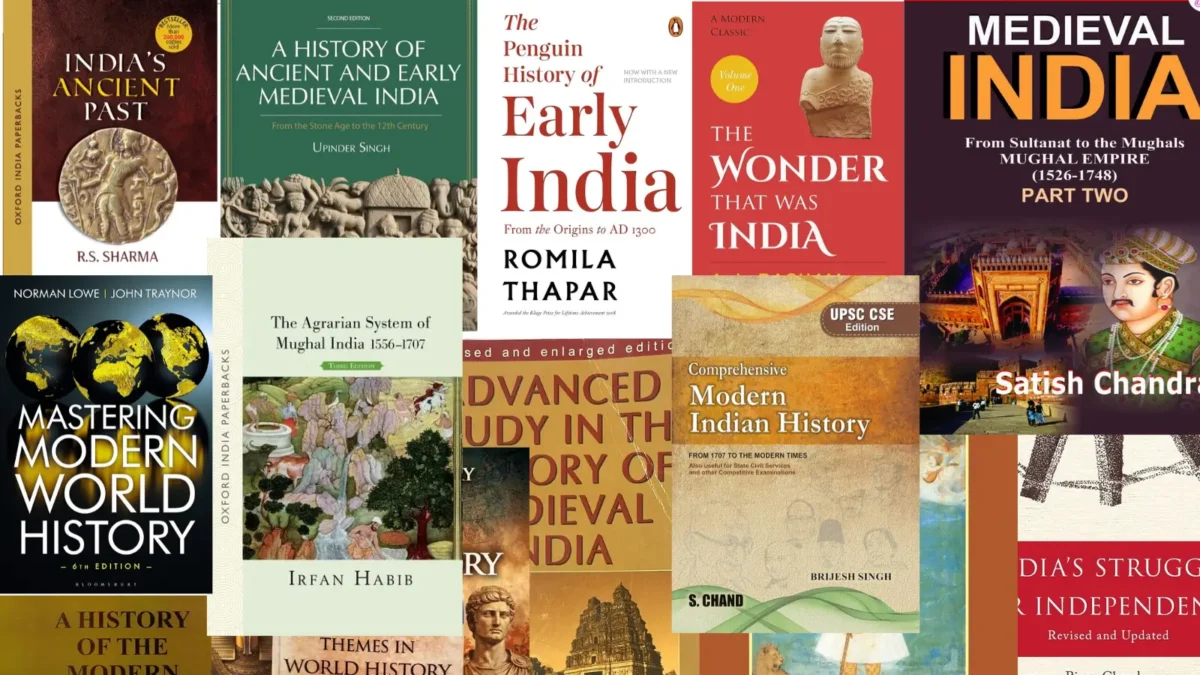
History is one of the optional subjects in the UPSC Civil Services Main Examination. It is a popular choice among candidates with an interest in Indian and world history. However, the History Optional syllabus is extensive and requires more than a general understanding of historical events. Candidates must develop a sound understanding of political, economic, social and cultural developments, historical sources, different interpretations and historiographical debates.
Choosing the right books and study material is therefore an important part of preparing for History Optional. A carefully selected booklist can help cover the syllabus systematically without wasting time on too many overlapping resources.
This article provides a comprehensive list of recommended books, NCERT textbooks, IGNOU study material, reference books, online resources and notes for both History Optional papers. It covers Ancient Indian History, Medieval Indian History, Modern Indian History and World History.
1. UPSC History Optional Examination: An Overview
History is an optional subject in the UPSC Civil Services Main Examination. The optional subject consists of two descriptive papers, each carrying 250 marks.
| Particulars | Details |
|---|---|
| Optional subject | History |
| Paper I | 250 marks |
| Paper II | 250 marks |
| Total marks | 500 marks |
| Duration | 3 hours for each paper |
| Nature of examination | Descriptive |
UPSC History Optional syllabus: Paper-wise division
| Paper | Major areas covered |
|---|---|
| Paper I | Ancient Indian History and Medieval Indian History |
| Paper II | Modern Indian History and World History |
Paper I primarily examines the historical developments in the Indian subcontinent from prehistoric times to the eighteenth century. Paper II covers modern Indian history, the freedom struggle, post-independence developments and major events in world history.
Candidates should refer to the official UPSC notification for the complete and latest syllabus before beginning their preparation.
2. UPSC History Optional Books for Paper I
Paper I is divided into Ancient Indian History and Medieval Indian History. It covers archaeological sources, literary traditions, political developments, economic structures, society, religion, art, architecture and cultural developments.
2.1 Best Books for Ancient Indian History
Ancient Indian History requires an understanding of archaeological evidence, inscriptions, coins, literary sources, political institutions, economic developments and religious traditions. The following books are useful for building a strong foundation and developing analytical understanding.
1. India’s Ancient Past – R.S. Sharma
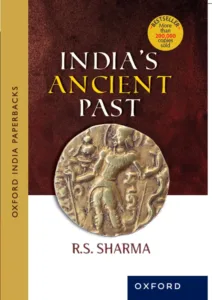
- Title: India’s Ancient Past
- Author: R.S. Sharma
- Publisher: Oxford University Press
- Category: Ancient Indian History
- Priority: Essential reading
India’s Ancient Past is one of the most useful introductory books for Ancient Indian History. It provides a systematic account of early Indian civilisation, political developments, economic conditions, social structures and religious developments.
Important topics covered:
- Prehistoric cultures and the beginning of agriculture.
- Indus Valley Civilisation.
- Vedic society and the emergence of states.
- Mahajanapadas and the rise of Magadha.
- Mauryan Empire and post-Mauryan developments.
- Gupta Empire and developments in ancient Indian society.
- Economic and social changes in early India.
Recommendation: This should be one of the first books to read for Ancient Indian History. Use it as a foundation and supplement it with Upinder Singh for greater depth.
2. A History of Ancient and Early Medieval India – Upinder Singh
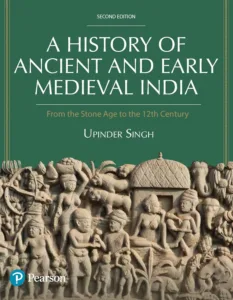
- Title: A History of Ancient and Early Medieval India
- Author: Upinder Singh
- Publisher: Pearson
- Category: Ancient and Early Medieval Indian History
- Priority: Highly recommended
This is a detailed academic work covering the history of the Indian subcontinent from prehistoric times to the early medieval period. It provides considerable attention to archaeological evidence, inscriptions, literary sources, religious traditions, political developments and historical interpretations.
Important topics covered:
- Archaeological sources and methods of historical reconstruction.
- Harappan Civilisation and prehistoric cultures.
- Vedic period and early state formation.
- Mauryan and post-Mauryan India.
- Gupta and post-Gupta developments.
- Early medieval regional kingdoms.
- Art, architecture, religion and society.
Recommendation: This is one of the most valuable reference books for History Optional Paper I. The second edition, released by Pearson in 2024, is particularly worth considering. Candidates with limited preparation time can read it selectively according to the syllabus.
3. Early India: From the Origins to AD 1300 – Romila Thapar
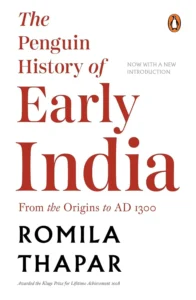
- Title: Early India: From the Origins to AD 1300
- Author: Romila Thapar
- Publisher: University of California Press / Penguin editions
- Category: Ancient Indian History
- Priority: Advanced reference
This book provides an interpretative understanding of early Indian history. It examines the evolution of society, political institutions, religious traditions, economic structures and cultural developments.
Recommendation: Read selectively to develop a deeper understanding of historical interpretations, social changes and the evolution of early Indian political structures.
4. The Wonder That Was India – A.L. Basham
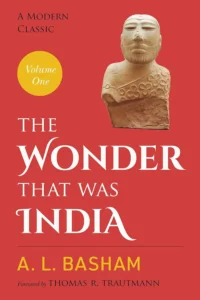
- Title: The Wonder That Was India
- Author: A.L. Basham
- Publisher: Picador / various international editions
- Category: Ancient Indian civilisation and culture
- Priority: Supplementary reference
This book provides an account of ancient Indian civilisation, including religion, philosophy, literature, science, social institutions and cultural achievements.
Recommendation: Particularly useful for enriching answers on ancient Indian society, religious traditions, philosophy and cultural developments. It should not replace the principal syllabus-oriented textbooks.
5. A History of South India – K.A. Nilakanta Sastri
- Title: A History of South India
- Author: K.A. Nilakanta Sastri
- Publisher: Oxford University Press
- Category: South Indian History
- Priority: Supplementary reference
This is an important reference for understanding the political, economic and cultural developments of South India.
Important topics:
- Satavahanas and early Deccan kingdoms.
- Pallavas and Chalukyas.
- Chola administration and local government.
- Trade, commerce and maritime contacts.
- Temple architecture and religious developments.
- Regional political and cultural developments.
Recommendation: Use this book selectively for the South Indian portions of the syllabus, particularly the Cholas, Pallavas, Chalukyas and regional cultural traditions.
2.2 Best Books for Medieval Indian History
Medieval Indian History covers the Delhi Sultanate, Mughal Empire, regional kingdoms, administrative systems, agrarian structures, trade, society, religion, art and architecture.
1. Medieval India: From Sultanat to the Mughals – Satish Chandra
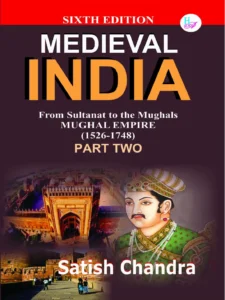
- Title: Medieval India: From Sultanat to the Mughals
- Author: Satish Chandra
- Publisher: Har-Anand Publications
- Category: Medieval Indian History
- Priority: Essential reading
This is a standard reference for Medieval Indian History. It is published in two parts, covering the Delhi Sultanate and the Mughal Empire respectively.
Important topics covered:
- Political developments under the Delhi Sultanate.
- Administrative and economic institutions.
- Vijayanagara and Bahmani kingdoms.
- Foundation and expansion of the Mughal Empire.
- Mughal administration and the mansabdari system.
- Agrarian relations and the Mughal economy.
- Religious policies and cultural developments.
Recommendation: This should be a core book for Medieval Indian History. Read both parts according to the syllabus and prepare separate notes on administration, economy, society and regional developments.
2. The Agrarian System of Mughal India – Irfan Habib
- Title: The Agrarian System of Mughal India
- Author: Irfan Habib
- Publisher: Oxford University Press
- Category: Medieval Indian Economic History
- Priority: Advanced reference
This is an important academic work on the agrarian economy of Mughal India. It examines land revenue, agricultural production, rural society, the relationship between the state and peasants and the economic structure of the Mughal Empire.
Recommendation: Particularly useful for questions on Mughal agrarian relations, land revenue administration, rural economy and the nature of the Mughal state.
3. Advanced Study in the History of Medieval India – J.L. Mehta
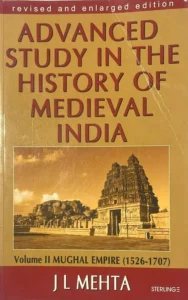
- Author: Advanced Study in the History of Medieval India
- Author: J.L. Mehta
- Publisher: Sterling Publishers
- Category: Medieval Indian History
- Priority: Supplementary reference
This multi-volume work provides detailed coverage of medieval Indian political and administrative developments.
Recommendation: Consult relevant chapters when additional information is required on the Delhi Sultanate, Mughal Empire, political institutions and regional developments. It is not necessary to read all volumes from beginning to end.
4. The Mughal Empire – J.F. Richards
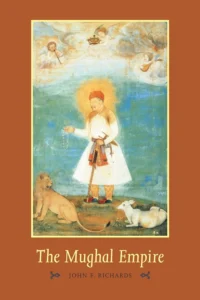
- Author: The Mughal Empire
- Author: John F. Richards
- Publisher: Cambridge University Press
- Category: Mughal History
- Priority: Advanced reference
This book offers an academic understanding of the Mughal Empire, including imperial expansion, administration, political institutions and the relationship between the empire and regional powers.
Recommendation: Use selectively to improve answers on Mughal state formation, political structures and imperial administration.
2.3 Books for Historiography and Historical Sources
History Optional is not simply about memorising dates and events. Candidates should understand how historical knowledge is constructed and how historians interpret the same events differently.
Some useful books for developing this understanding are:
| Book | Author | Usefulness |
|---|---|---|
| What Is History? | E.H. Carr | Historical facts, interpretation and objectivity. |
| The Historian’s Craft | Marc Bloch | Historical methods and source criticism. |
| The Idea of History | R.G. Collingwood | Historical thought and interpretation. |
| Past Before Us | Romila Thapar | Historical traditions and representations of the past in early India. |
These are supplementary academic works. Candidates should first understand the basic syllabus and then use these books to develop analytical answers.
3. UPSC History Optional Books for Paper II
Paper II covers Modern Indian History and World History. It requires an understanding of colonialism, British expansion, economic and social changes, nationalism, the Indian freedom struggle, post-independence developments and major global historical transformations.
3.1 Best Books for Modern Indian History
Modern Indian History is an important component of Paper II. Candidates should study the period from the eighteenth century onwards, with particular attention to British expansion, colonial policies, social and religious reform movements, economic changes, nationalism and independence.
1. From Plassey to Partition and After – Sekhar Bandyopadhyay
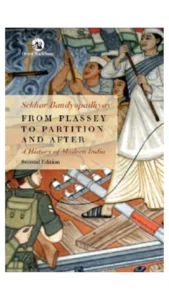
- Title: From Plassey to Partition and After
- Author: Sekhar Bandyopadhyay
- Publisher: Orient Blackswan
- Category: Modern Indian History
- Priority: Essential reading
This is one of the most useful academic books for Modern Indian History. It provides a comprehensive account of colonial rule, social and economic developments, nationalism, communalism and the Partition of India.
Important topics covered:
- Decline of the Mughal Empire and the rise of British power.
- Colonial economy and social transformation.
- Tribal and peasant movements.
- Socio-religious reform movements.
- Growth of Indian nationalism.
- Gandhian movements and revolutionary nationalism.
- Communal politics and Partition.
Recommendation: This should be among the principal books for Modern Indian History. It is particularly useful for developing analytical understanding rather than merely learning a chronological account of events.
2. India’s Struggle for Independence – Bipan Chandra and Others
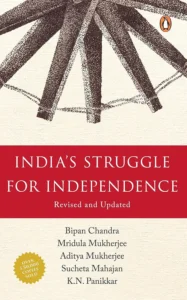
- Title: India’s Struggle for Independence
- Authors: Bipan Chandra, Mridula Mukherjee, Aditya Mukherjee, K.N. Panikkar and Sucheta Mahajan
- Publisher: Penguin Random House India
- Category: Indian National Movement
- Priority: Essential reading
This is a standard book for understanding the Indian national movement. It discusses the evolution of nationalism, political organisations, Gandhian movements, revolutionary activities and the struggle for independence.
Recommendation: Read this book carefully for the national movement. Pay particular attention to the background, causes, objectives, leadership, nature and consequences of different movements.
3. Modern India 1885–1947 – Sumit Sarkar
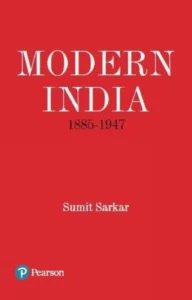
- Title: Modern India 1885–1947
- Author: Sumit Sarkar
- Publisher: Macmillan India (original publication)
- Category: Modern Indian History
- Priority: Advanced reference
This book provides a detailed and analytical account of the Indian national movement and the social and political developments during the late colonial period.
Important topics:
- Growth of Indian nationalism.
- Swadeshi and revolutionary movements.
- Gandhian mass movements.
- Peasant and working-class movements.
- Left-wing political developments.
- Communalism and the Partition.
Recommendation: Use selectively to develop a deeper understanding of nationalism, social movements and different interpretations of the freedom struggle.
4. Comprehensive Modern Indian History – Brijesh Singh
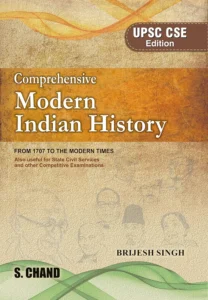
- Title: Comprehensive Modern Indian History
- Author: Brijesh Singh
- Publisher: S. Chand Publishing
- Category: Modern Indian History
- Priority: Recommended supplementary book
Comprehensive Modern Indian History covers the development of modern India from 1707 to the post-independence period. The book is organised chronologically and covers important political, administrative, economic and social developments during the period.
Important features:
- Coverage of the decline of the Mughal Empire and the emergence of regional powers.
- European settlements and the expansion of British rule.
- Important Acts, administrative developments and Governor-Generals.
- Socio-religious reform movements.
- Tribal and peasant movements.
- The Revolt of 1857.
- Growth of Indian nationalism and the freedom struggle.
- Gandhian movements and revolutionary activities.
- Subhas Chandra Bose and the Indian National Army.
- Independence and selected post-independence developments.
The book also includes maps, flowcharts, tables, diagrams, illustrations and chapter-end questions to support systematic learning and revision.
Recommendation: This book can be used as a supplementary and foundation-oriented resource for Modern Indian History. Its chronological presentation, maps and visual explanations are useful for understanding events and revising factual information. However, candidates preparing specifically for History Optional should complement it with academic books such as From Plassey to Partition and After by Sekhar Bandyopadhyay and India’s Struggle for Independence by Bipan Chandra and others. These provide additional depth and historical interpretations required for optional-level answers.
View Comprehensive Modern Indian History on the official S. Chand Publishing website.
5. A Brief History of Modern India – Rajiv Ahir
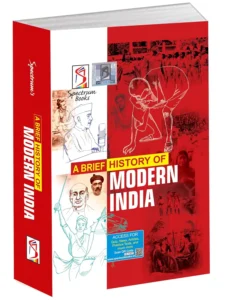
- Title: A Brief History of Modern India
- Author: Rajiv Ahir
- Publisher: Spectrum Books
- Category: Modern Indian History
- Priority: Supplementary reading
This book provides a systematic and examination-oriented account of Modern Indian History. It is particularly useful for chronology, important events, personalities, organisations and administrative developments.
Recommendation: Use it for quick revision and factual consolidation. It should not be the only source for History Optional Paper II.
6. Nationalism and Colonialism in Modern India – Bipan Chandra
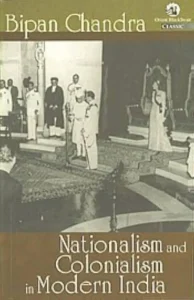
- Title: Nationalism and Colonialism in Modern India
- Author: Bipan Chandra
- Publisher: Orient Blackswan
- Category: Colonialism and Nationalism
- Priority: Advanced supplementary reading
This book is useful for understanding the relationship between colonialism, economic exploitation and the growth of Indian nationalism.
Recommendation: Read selected chapters for questions involving the economic critique of colonialism and the development of Indian nationalism.
7. Peasant Movements in India – D.N. Dhanagare
- Title: Peasant Movements in India: 1920-1950
- Author: D.N. Dhanagare
- Publisher: Oxford University Press
- Category: Social and Agrarian History
- Priority: Specialised reference
This book examines peasant movements and agrarian protest in India. It is useful for understanding the social and economic conditions behind popular resistance and rural movements.
Recommendation: Consult selected chapters for questions on peasant movements, agrarian structures and popular resistance.
3.2 Best Books for World History
World History is another important component of Paper II. The syllabus includes the major political, economic and social transformations that shaped the modern world, particularly from the eighteenth century onwards.
1. Mastering Modern World History – Norman Lowe
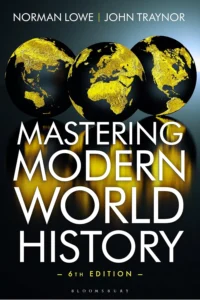
- Title: Mastering Modern World History
- Author: Norman Lowe
- Publisher: Bloomsbury Academic
- Category: World History
- Priority: Essential reading
This is one of the most useful books for preparing World History. It provides a systematic account of political and economic developments in Europe and other parts of the world.
Important topics covered:
- French Revolution and its consequences.
- Industrial Revolution.
- Nationalism and nation-state formation.
- Imperialism and colonial expansion.
- First World War and its consequences.
- Russian Revolution.
- Fascism and Nazism.
- Second World War.
- Cold War and international relations.
- Decolonisation and the changing world order.
Recommendation: Make this your principal textbook for World History. The 2023 Bloomsbury edition, with John Traynor as a contributing author, is a current edition worth considering. Read the relevant chapters according to the UPSC syllabus.
2. Themes in World History – NCERT Class XI
- Title: Themes in World History – NCERT Class XI
- Author: NCERT textbook development team
- Publisher: National Council of Educational Research and Training
- Category: World History foundation
- Priority: Foundation reading
This textbook provides an introductory understanding of major developments in world history. It is useful for understanding the background of historical events, social transformations and the emergence of modern political and economic systems.
Recommendation: Read it before or alongside Norman Lowe if you are new to World History. Use the official NCERT website to access the available textbook.
3. A History of the Modern World – Jain and Mathur
- Title: A History of the Modern World
- Authors: Dr. Hukam Chand Jain and Dr. Krishna Chandra Mathur
- Publisher: Check the edition and publisher details on the book’s current imprint.
- Category: World History
- Priority: Supplementary reference
This is an additional reference for European and world political developments. It can be consulted for topics requiring greater detail on revolutions, nationalism, imperialism and international relations.
4. The Age of Revolution: 1789–1848 – Eric Hobsbawm
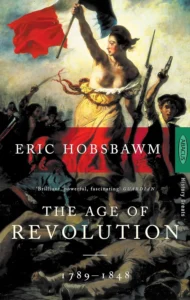
- Title: The Age of Revolution: 1789–1848
- Author: Eric Hobsbawm
- Publisher: Vintage / various editions
- Category: World History
- Priority: Advanced reference
This book examines the political and economic transformations associated with the French Revolution and Industrial Revolution. It is useful for understanding the relationship between political change, capitalism and social transformation.
5. The Age of Capital: 1848–1875 – Eric Hobsbawm
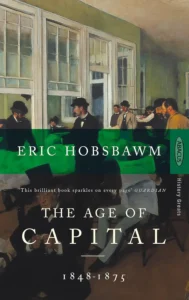
- Title: The Age of Capital: 1848–1875
- Author: Eric Hobsbawm
- Publisher: Vintage / various editions
- Category: World History
- Priority: Advanced reference
This book explores the development of capitalism, industrialisation and the transformation of European and global economic structures during the nineteenth century.
6. The Age of Empire: 1875–1914 – Eric Hobsbawm
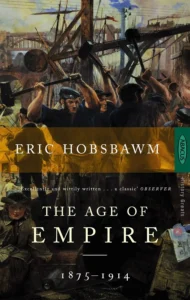
- Title: The Age of Empire: 1875–1914
- Author: Eric Hobsbawm
- Publisher: Vintage / various editions
- Category: World History
- Priority: Advanced reference
This book is particularly useful for understanding imperialism, colonial expansion, nationalism and international rivalries before the First World War.
7. The Age of Extremes: 1914–1991 – Eric Hobsbawm
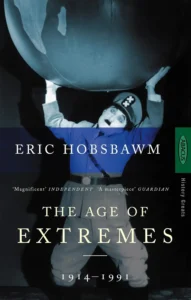
- Title: The Age of Extremes: 1914–1991
- Author: Eric Hobsbawm
- Publisher: Vintage / various editions
- Category: World History
- Priority: Advanced reference
This book examines the major political, economic and ideological developments of the twentieth century, including the World Wars, communism, capitalism and the Cold War.
Recommendation for the Hobsbawm books: These books are not compulsory for UPSC preparation. Norman Lowe should remain the principal source. Use the Hobsbawm series selectively for developing a deeper understanding of capitalism, imperialism, industrialisation and global transformations.
4. Best NCERT Books for UPSC History Optional
NCERT textbooks are useful for establishing conceptual clarity and developing a chronological understanding of historical developments. They should form part of the foundation reading, particularly for candidates who have not studied History at the graduation level.
| Textbook | Area covered | Recommended use |
|---|---|---|
| Class XI: Themes in World History | World History | Foundation for Paper II |
| Class XII: Themes in Indian History Part I | Ancient Indian History | Foundation for Paper I |
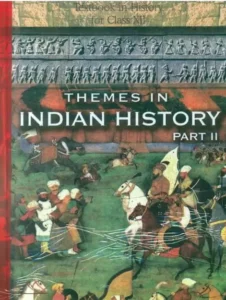
| Class XII: Themes in Indian History Part II | Medieval Indian History | Foundation for Paper I |
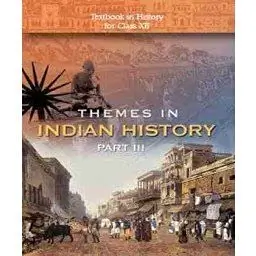
| Class XII: Themes in Indian History Part III | Colonial and modern Indian history | Foundation for Paper II |
Older NCERT history textbooks by R.S. Sharma, Satish Chandra and Bipan Chandra can also be useful where available. Candidates should supplement them with the more detailed books recommended in this article.
5. Best IGNOU Study Material for UPSC History Optional
IGNOU is an important source of free academic study material. Its postgraduate History programme provides structured learning material that can be useful for developing an understanding of historical themes, sources, institutions, economic developments and historiography.
Some useful areas to explore include:
- Ancient and medieval societies.
- Modern world history.
- Historiography and historical methods.
- Political structures in India.
- History of the Indian economy.
- Social structures in Indian history.
- Religious thought and institutions.
- Indian national movement.
Important IGNOU study material:
| Course code | Course title | Useful for |
|---|---|---|
| MHI-01 | Ancient and Medieval Societies | Paper I |
| MHI-02 | Modern World | Paper II |
| MHI-03 | Historiography | Both papers |
| MHI-04 | Political Structures in India | Paper I |
| MHI-05 | History of Indian Economy | Paper I and Paper II |
| MHI-06 | Evolution of Social Structures in India Through the Ages | Both papers |
| MHI-09 | Indian National Movement | Paper II |
These courses are useful for their respective historical themes, but their coverage should not be treated as identical to the UPSC optional syllabus. Select relevant blocks and topics rather than attempting to read every IGNOU course in full.
6. Other Important Study Materials and Online Resources
In addition to books and IGNOU material, candidates can use original historical documents, archival collections, inscriptions, maps and research publications to enrich their understanding.
6.1 National Archives of India
The National Archives of India preserves historical records and documents relating to the administration and history of India. Its collections can help candidates understand the importance of archival sources in historical research.
Website: National Archives of India
6.2 Archaeological Survey of India
The Archaeological Survey of India is an important source for information on archaeological sites, monuments, excavations and conservation of historical remains.
It is particularly relevant for topics concerning prehistoric cultures, the Indus Valley Civilisation, ancient monuments, architecture and archaeological evidence.
Website: Archaeological Survey of India
6.3 Indian Council of Historical Research
The Indian Council of Historical Research supports historical research and provides access to academic publications and research-related resources. Candidates can explore its publications for deeper academic perspectives.
Website: Indian Council of Historical Research
6.4 Gandhi Heritage Portal
The Gandhi Heritage Portal provides access to Gandhi’s writings, correspondence, speeches and other historical material. It is especially useful for understanding Gandhian philosophy and the Indian national movement.
Website: Gandhi Heritage Portal
6.5 British Library
The British Library has extensive historical collections, manuscripts, photographs, maps and archival resources. Its India-related collections can provide useful insights into colonial-era historical sources.
Website: British Library
7. Important Historians and Their Works for History Optional
One of the important requirements of History Optional is the ability to understand different historical interpretations. Candidates should become familiar with major historians and their contributions to the study of Indian and world history.
| Historian | Important area of study |
|---|---|
| R.S. Sharma | Ancient Indian society, economy and political institutions. |
| Romila Thapar | Ancient India, social structures and historical interpretation. |
| Upinder Singh | Archaeology, ancient Indian history and historical sources. |
| A.L. Basham | Ancient Indian civilisation, religion and culture. |
| Satish Chandra | Medieval Indian political, economic and social history. |
| Irfan Habib | Mughal agrarian economy and medieval economic history. |
| J.F. Richards | Mughal Empire and imperial structures. |
| Bipan Chandra | Colonialism, economic nationalism and the Indian freedom struggle. |
| Sumit Sarkar | Indian nationalism and social movements. |
| Sekhar Bandyopadhyay | Colonial India, nationalism and social history. |
| Ranajit Guha | Subaltern studies and popular resistance. |
| Eric Hobsbawm | Industrialisation, capitalism, nationalism and world history. |
| E.P. Thompson | Social and working-class history. |
| A.J.P. Taylor | European diplomacy and the origins of the Second World War. |
Candidates should not attempt to memorise the entire works of every historian. Instead, understand their important arguments and use relevant interpretations in answers wherever appropriate.
8. Previous Year Question Papers for History Optional
Previous Year Questions (PYQs) are essential for understanding the nature of questions asked in the History Optional examination. They also help candidates identify recurring themes and important areas of the syllabus.
Candidates should collect question papers for both Paper I and Paper II for at least the previous 10 to 15 years. If possible, maintain a longer question-paper collection for identifying historical trends.
How to use previous year questions:
- Classify questions according to the official syllabus.
- Identify topics that have been repeatedly examined.
- Understand the difference between factual, analytical and interpretative questions.
- Prepare separate notes for important recurring themes.
- Practise writing answers within the prescribed time.
- Analyse questions that require historians’ views and different interpretations.
UPSC provides official question papers on its website.
9. How to Prepare Notes for History Optional
Preparing your own notes is one of the most important parts of History Optional preparation. Reading several books without consolidating the information can make revision difficult.
Instead of copying entire chapters, prepare concise, topic-wise notes according to the UPSC syllabus.
Suggested structure for History Optional notes
| Component | What to include |
|---|---|
| Historical background | Origin and background of the topic. |
| Chronology | Important dates, events and developments. |
| Causes | Political, economic, social and ideological factors. |
| Main developments | Events, personalities, institutions and movements. |
| Historical sources | Archaeological, literary, archival and other sources. |
| Historiography | Important historians and their interpretations. |
| Consequences | Short-term and long-term effects. |
| Critical analysis | Different viewpoints and historical debates. |
| PYQs | Previous questions related to the topic. |
| Maps and diagrams | Relevant locations, routes, territories and illustrations. |
Importance of maps in History Optional
Maps are useful for understanding the geographical dimensions of historical developments. Candidates should practise locating important archaeological sites, ancient settlements, kingdoms, trade routes, battles and centres of political activity.
For Paper I, practise maps showing the Indus Valley sites, Mahajanapada centres, Mauryan territories, important ancient trade routes, medieval kingdoms and major cultural centres.
For Paper II, practise maps showing European imperial powers, important locations associated with the World Wars, revolutionary centres and important developments in colonial India.
10. Recommended Booklist: Essential Books to Start With
Although several books and reference materials are available, candidates do not need to read every book mentioned in this article. A limited and carefully selected booklist is usually more effective.
Paper I – Ancient and Medieval Indian History
| Area | Recommended book | Author |
|---|---|---|
| Ancient India | India’s Ancient Past | R.S. Sharma |
| Ancient and Early Medieval India | A History of Ancient and Early Medieval India | Upinder Singh |
| Ancient Indian Culture | The Wonder That Was India | A.L. Basham |
| South Indian History | A History of South India | K.A. Nilakanta Sastri |
| Medieval India | Medieval India: From Sultanat to the Mughals (Parts I and II) | Satish Chandra |
| Mughal Economy | The Agrarian System of Mughal India | Irfan Habib |
| Mughal Empire | The Mughal Empire | J.F. Richards |
| Historiography | What Is History? | E.H. Carr |
Paper II – Modern Indian History and World History
| Area | Recommended book | Author |
|---|---|---|
| Modern Indian History | From Plassey to Partition and After | Sekhar Bandyopadhyay |
| Indian National Movement | India’s Struggle for Independence | Bipan Chandra and others |
| Modern Indian History | Comprehensive Modern Indian History | Brijesh Singh |
| Modern Indian History | Modern India 1885–1947 | Sumit Sarkar |
| Modern India Revision | A Brief History of Modern India | Rajiv Ahir |
| World History | Mastering Modern World History | Norman Lowe |
| World History Foundation | Themes in World History | NCERT |
| World History – Advanced | The Age of Revolution | Eric Hobsbawm |
11. How to Use These Books Effectively
Reading multiple books on the same topic is not necessarily beneficial. Candidates should follow a systematic approach to avoid duplication and make revision manageable.
Step 1: Start with the official syllabus. Divide the syllabus into smaller topics and prepare a checklist.
Step 2: Read foundation books. Use NCERT textbooks and introductory books to understand the chronology and basic developments.
Step 3: Study the core reference books. Read the recommended academic books according to the syllabus. Avoid reading every supplementary book in full.
Step 4: Use IGNOU material selectively. Consult relevant study blocks for additional explanations and academic perspectives.
Step 5: Prepare topic-wise notes. Consolidate information from different sources into one set of notes for each syllabus topic.
Step 6: Integrate PYQs. Add previous year questions to the relevant topic notes and identify areas requiring further preparation.
Step 7: Practise answer writing. Develop the ability to present historical arguments, examples, interpretations and evidence in a structured manner.
12. Frequently Asked Questions (FAQs)
1. Which is the best book for UPSC History Optional Paper I?
For Ancient Indian History, India’s Ancient Past by R.S. Sharma and A History of Ancient and Early Medieval India by Upinder Singh are highly recommended. For Medieval Indian History, Medieval India: From Sultanat to the Mughals by Satish Chandra is an important reference.
2. Which is the best book for UPSC History Optional Paper II?
For Modern Indian History, From Plassey to Partition and After by Sekhar Bandyopadhyay and India’s Struggle for Independence by Bipan Chandra and others are highly recommended. For World History, Mastering Modern World History by Norman Lowe is a useful principal textbook.
3. Is NCERT sufficient for UPSC History Optional?
No. NCERT textbooks are useful for building a foundation, but History Optional requires greater depth and analytical understanding. Candidates should supplement NCERTs with standard academic books, relevant IGNOU material and topic-wise notes.
4. Is IGNOU material useful for History Optional?
Yes. IGNOU postgraduate History study material is useful for understanding historical themes, historiography, political institutions, economic developments and the Indian national movement. However, it should be used selectively along with standard reference books.
5. Is Norman Lowe sufficient for World History?
Norman Lowe’s Mastering Modern World History is a useful principal textbook. Candidates should also refer to NCERT and selected academic works where greater depth is required, particularly for capitalism, imperialism, nationalism and the World Wars.
6. Should candidates prepare separate notes for Paper I and Paper II?
Yes. Maintaining separate notes for Ancient India, Medieval India, Modern India and World History makes preparation and revision easier. Notes should be organised according to the official UPSC syllabus.
7. How many books should be read for History Optional?
There is no fixed number of books. Candidates should prioritise a small set of standard books, use supplementary references selectively and revise their notes regularly. Reading a large number of overlapping books is not necessary.
8. Where can I download UPSC History Optional previous year question papers?
Previous year question papers for History Optional Paper I and Paper II can be downloaded from the official UPSC website under the Previous Question Papers section.
9. Is Comprehensive Modern Indian History by Brijesh Singh useful for History Optional?
Comprehensive Modern Indian History by Brijesh Singh, published by S. Chand, is useful for building a chronological understanding of Modern Indian History. It includes maps, tables, flowcharts and practice questions. For History Optional, candidates should supplement it with academic books that provide deeper historical interpretations and analysis.
10. Should candidates study historians and historiography for History Optional?
Yes. Understanding historians’ interpretations and historiographical approaches can improve the analytical quality of answers. Candidates should study relevant historians and their arguments in connection with specific syllabus topics rather than memorising names without understanding their contributions.
Conclusion
Preparing for UPSC History Optional requires a balanced combination of standard textbooks, academic reference books, NCERT material, IGNOU resources, historical documents and regular answer-writing practice.
For Paper I, candidates should concentrate on Ancient and Medieval Indian History, with particular attention to historical sources, political institutions, economic structures, society, religion and cultural developments. For Paper II, the focus should be on colonialism, nationalism, the Indian freedom struggle, post-independence developments and major transformations in world history.
Rather than collecting too many books, candidates should select a few reliable sources, prepare syllabus-oriented notes and revise them repeatedly. A good understanding of historical developments, supported by evidence and different historical interpretations, is essential for writing effective answers in the History Optional examination.