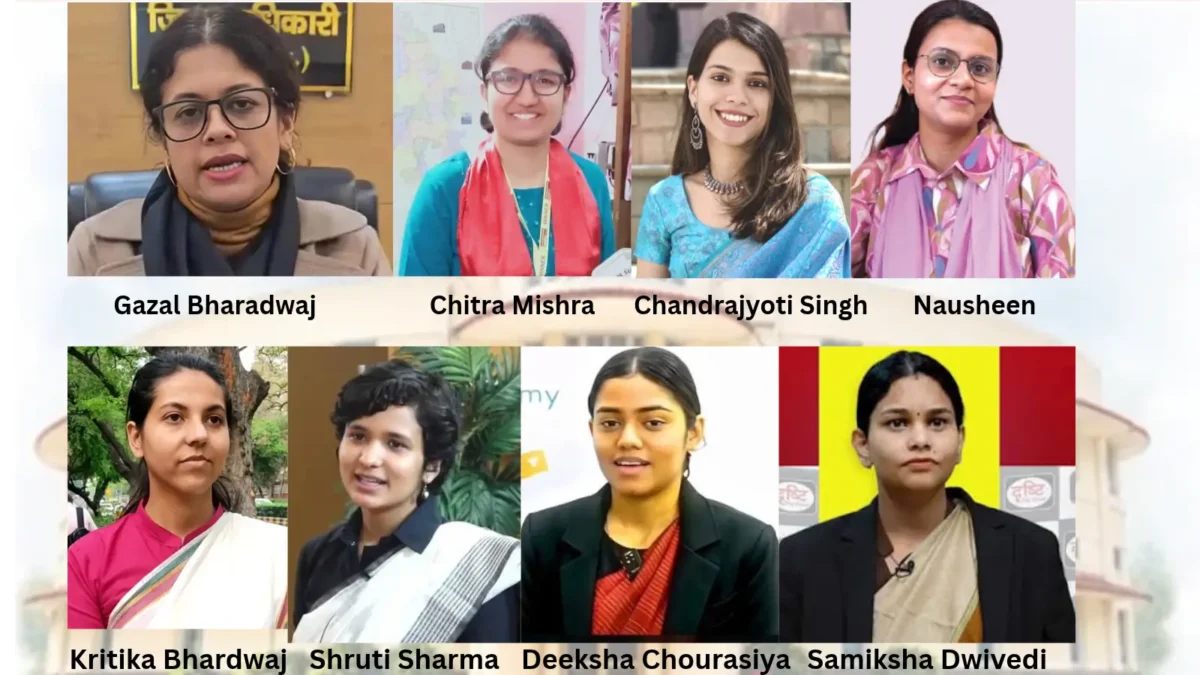
This article provides views of UPSC History Optional Toppers and their strategies. The article has been compiled from various sources.
Which UPSC Civil Services rank-holders chose History Optional, how much did they score, and what can aspirants learn from their preparation? This researched guide brings together reported marks, interviews, recommended books and practical lessons from selected candidates across approximately two decades.
Research note (November 2026): This is a selected, source-backed compilation, not a complete census of all History Optional candidates. AIR means All India Rank in the Civil Services Examination, not a rank in History Optional. A blank mark means no sufficiently reliable figure was established in the sources consulted. Some figures come from coaching or educational websites rather than UPSC-published candidate marksheets.
UPSC History Optional Toppers: Year, Rank and Marks
For CSE 2013 onward, the two optional papers carry 250 marks each (500 combined). Earlier examinations used a different optional-subject structure; pre-2013 scores should not be compared directly with current scores.
| CSE year | Candidate | AIR | Paper I | Paper II | History total | Evidence |
|---|---|---|---|---|---|---|
| 2025 | Deeksha Chourasiya | 44 | Not verified | Not verified | Not verified | SSH results |
| 2025 | Samiksha Dwivedi | 56 | Not verified | Not verified | 299 | LotusArise secondary |
| 2024 | Avdhija Gupta | 43 | 150 | 153 | 303 | SSH |
| 2023 | Nausheen | 9 | 166 | 142 | 308 | Interview |
| 2023 | Kritika Bhardwaj | 370 | 133 | 124 | 257 | Interview |
| 2022 | Janhavi Sathe | 127 | 153 | 149 | 302 | SSH |
| 2022 | Siddharth Shukla | 18 | Not verified | Not verified | Not verified | SSH results; marks unverified |
| 2021 | Shruti Sharma | 1 | 150 | 156 | 306 | SSH |
| 2020 | Rajat Ravindra Ubhaykar | 49 | 151 | Not verified | Not verified | Conflicting published totals |
| 2019 | Chandrajyoti Singh | 28 | 131 | 159 | 290 | SSH |
| 2018 | Chitra Mishra | 20 | 139 | 161 | 300 | Testbook |
| 2018 | Nidhi Siwach | 83 | 150 | 140 | 290 | Testbook |
| 2018 | Vikram Phadke | Not verified | 170 | 154 | 324 | Rank inconsistent across sources |
| 2017 | Ishwar Kumar Kandoo | 187 | 160 | 156 | 316 | SSH |
| 2017 | Aparajita Singh | 40 | 138 | 149 | 287 | Testbook |
| 2016 | Abhishek Narayan Sinha | 392 | 138 | 173 | 311 | SSH |
| 2015 | Gazal Bharadwaj | 40 | 114 | 131 | 245 | First-person strategy |
| 2015 | Hardeep Singh | Not verified | 107 | 140 | 247 | Secondary compilation: conflicting total 257 |
| 2011 | Surabhi Malik | 51 | Not verified | Not verified | Not verified | BYJU’S |
| 2007 | Sajjansingh Ramsingh Chavan | 29 | Not verified | Not verified | Not verified | YASHADA annual report; History and Public Administration |
Verification cautions:
Rajat Ubhaykar’s total is reported as 301 in one source while the same source’s 151 + 152 breakdown gives 303; another compilation lists 151 + 150.
Vikram Phadke’s rank differs across archive pages, though a 324 History score is reported.
Hardeep Singh’s secondary compilation gives component marks of 107 + 140 = 247 while printing 257 as the total.
These inconsistencies are intentionally flagged rather than resolved by guesswork.
Samiksha Dwivedi’s 299 is a secondary report requiring marksheet confirmation.
The 2007 YASHADA record lists two optional subjects under the pre-2013 system.
UPSC History Optional toppers views on the subject
Gazal Bharadwaj (CSE 2015, AIR 40): choose interest over perceived scoring trends
In her own published strategy, Gazal recorded 245 History marks in both CSE 2014 (125 + 120) and CSE 2015 (114 + 131). She argues that History requires interpretation, sources and historiographical perspectives, not simply memorising chronology. Her core resources included Upinder Singh, IGNOU BA/MA material, selective Romila Thapar, NCERT and Satish Chandra. Read her original strategy on Insights IAS.
Chitra Mishra – Rank 20, CSE 2018
Chitra Mishra shared detailed preparation material and strategy for History Optional Paper I. Her material discusses chapter-wise sources, previous-year question analysis, map preparation and answer presentation.
One particularly useful point in her guidance is the importance of presenting answers through a clear framework, maps, flowcharts and diagrams where appropriate. She also emphasises that preparation should remain selective and syllabus-oriented rather than becoming an exercise in collecting too many books and notes.
Chandrajyoti Singh (CSE 2019, AIR 28): finish a first reading, then write answers
According to her published strategy profile, she completed an initial syllabus reading in about four months, followed by answer-writing, mock tests and dedicated map practice. She favoured a limited set of books and short revision notes, and emphasised naming historians and their interpretations where relevant. Read the strategy profile.
Nausheen (CSE 2023, AIR 9): improvement through multiple attempts
In a detailed interview, Nausheen reported a History Optional score of 308 (166 in Paper I and 142 in Paper II), compared with 224 and 196 in earlier examinations. Her account is especially useful for understanding that improving answers and preparation methods can matter as much as adding new material. She identified solved previous-year questions and map material among her resources. Read Nausheen’s interview.
Kritika Bhardwaj (CSE 2023, AIR 370): paper-wise marks can fluctuate
Her published interview reports Paper I/Paper II scores of 128/122 in 2021, 131/74 in 2022 and 133/124 in 2023. These figures show why aspirants should evaluate their preparation separately for both papers instead of relying only on an overall score. Read Kritika’s interview.
Shruti Sharma (CSE 2021, AIR 1): History can contribute to the highest overall rank
Shruti Sharma obtained AIR 1 with History Optional, scoring 150 in Paper I and 156 in Paper II (306/500). Her result is a strong counterexample to claims that History cannot produce top ranks. It does not, by itself, establish that History is easier or more scoring than other optionals. See the answer-sheet and topper archive.
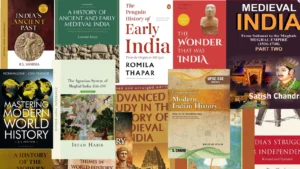
UPSC History Optional Toppers Recommended Books and Study Material
| Area | Books and resources | Attribution |
|---|---|---|
| Ancient India | Upinder Singh, A History of Ancient and Early Medieval India; R. S. Sharma, India’s Ancient Past; selected NCERT and IGNOU material | Gazal Bharadwaj; Chandrajyoti Singh |
| Medieval India | Satish Chandra, History of Medieval India; IGNOU BA/MA notes | Gazal Bharadwaj; Chandrajyoti Singh |
| Modern India | Bipan Chandra, History of Modern India; Sekhar Bandyopadhyay, From Plassey to Partition | Chandrajyoti Singh |
| World History | Norman Lowe, Mastering Modern World History; Jain and Mathur, A History of the Modern World | Chandrajyoti Singh |
| Maps and revision | Historical-site maps, compact self-made notes, solved PYQs and timed answer practice | Chandrajyoti Singh; Nausheen |
These are reported resources, not a mandatory shopping list. Choose a manageable core set, then use additional books only to fill syllabus gaps and deepen historical interpretation.
Seven practical lessons for History Optional preparation
- Begin with the UPSC syllabus: divide Paper I into Ancient and Medieval India and Paper II into Modern India and World History.
- Read previous-year questions topic-wise: identify recurring debates and the language UPSC uses to frame them.
- Study historiography: compare historians’ arguments, evidence and interpretations rather than listing facts alone.
- Practise maps separately: revise locations and their historical significance regularly.
- Use limited standard resources: keep notes concise enough for repeated revision.
- Write timed answers: focus on a direct argument, evidence, balanced assessment and conclusion.
- Review both papers independently: a strong Paper I score cannot compensate automatically for inadequate Paper II preparation.
How to use these insights with previous-year papers
For every syllabus topic, collect all available PYQs, classify them by theme, identify required evidence and historians, and practise a short outline before writing full answers. Compare your answer with the precise wording of the question and revise weak areas. This method makes the question archive a working study tool rather than merely a download collection.
Frequently asked questions
Has a UPSC AIR 1 candidate taken History Optional?
Yes. Shruti Sharma secured AIR 1 in CSE 2021 with History Optional, scoring 306/500.
Is 300 a good score in History Optional?
A score around 300/500 is a strong result among the selected examples listed here, but it is not a guaranteed selection threshold. Final rank depends on General Studies, Essay, the personality test and competition in that year.
Should I choose History Optional because toppers chose it?
No. Consider genuine interest, ability to engage with historical debates, available preparation time and comfort with the syllabus. Topper examples show what is possible, not what is typical.
Sources and further reading
The links below identify the sources used to prepare this article. First-person interviews are preferred for strategy; rank and marks data may come from third-party compilations and should be checked against individual marksheets when available.
- Self Study History: results and score archive
- Nausheen: first-person interview
- Kritika Bhardwaj: first-person interview
- Gazal Bharadwaj: first-person strategy, Insights IAS
- Chandrajyoti Singh: strategy, IAS Exam Portal
- Self Study History: topper strategies and answer sheets
- Testbook: History Optional marks compilation
- YASHADA annual report 2008–09
- BYJU’S: History Optional candidates
Editorial note: Reported marks and ranks are attributed to their published sources; disputed entries are marked. CSE 2026 is not included because final ranks and marks for that examination were not established in the research. Last reviewed: 13 November 2026.