Previous year question papers (PYQs) are among the most important resources for preparing for the History Optional subject in the UPSC Civil Services (Main) Examination. They help candidates understand the nature of questions, the depth of historical understanding expected by UPSC, the topics that receive repeated attention and the analytical approach required to write effective answers.
History Optional consists of two papers: Paper I and Paper II. Both papers carry 250 marks each and are part of the UPSC Civil Services Main Examination. A thorough analysis of previous year question papers can help candidates prepare systematically for both papers.
In this article, you can download UPSC History Optional previous year question papers in PDF format for Paper I and Paper II. The papers are organised year-wise so that candidates can easily access and practise questions from different years.
UPSC History Optional Previous Year Question Papers – Years 2013-2026
UPSC Civil Services Main Examination syllabus and pattern were changed in the year 2013. You can download the previous year question papers (PYQs) of History Optional for the UPSC Civil Services Main Examination from the tables given below. Separate PDF links are provided for Paper I and Paper II for each examination year. These question papers are useful for understanding the syllabus, identifying important themes, practising answer writing and evaluating preparation before the examination.
UPSC History Optional Previous Year Question Papers – Years 1995-2012
Note: Some older History Optional papers are reconstructed English transcriptions compiled from published sources, rather than scanned copies of the original UPSC question papers. Candidates should verify important details against authoritative sources wherever possible.
UPSC History Optional Paper I: Previous Year Questions
History Optional Paper I covers Ancient Indian History and Medieval Indian History. It examines the political, social, economic and cultural developments of different periods of Indian history.
Questions in Paper I require candidates to understand historical developments, interpret sources, examine different historical perspectives and analyse the causes and consequences of important events.
While practising Paper I questions, candidates should pay particular attention to the following broad areas:
- Sources of Ancient Indian History, including archaeological and literary sources.
- Prehistoric cultures and the Indus Valley Civilisation.
- Vedic society, religious developments and the rise of new religious movements.
- Mahajanapadas, the Mauryan Empire and post-Mauryan developments.
- Gupta and post-Gupta periods.
- Early medieval India and regional kingdoms.
- Delhi Sultanate and the Mughal Empire.
- Society, economy, administration, religion, art and architecture during ancient and medieval periods.
- Bhakti and Sufi movements and their social and cultural significance.
Download and practise Paper I question papers to understand how UPSC frames questions from these areas.
UPSC History Optional Paper II: Previous Year Questions
History Optional Paper II covers Modern Indian History and aspects of World History. It examines the political, economic, social and cultural developments from the middle of the eighteenth century onwards, along with important developments in world history.
Paper II requires an understanding of colonial expansion, the freedom struggle, the development of modern India and major political and economic changes across the world.
The following broad areas are important while analysing Paper II questions:
- European penetration into India and the establishment of British rule.
- Economic impact of British rule and changes in Indian society.
- Socio-religious reform movements in nineteenth-century India.
- Revolt of 1857 and its historical significance.
- Indian nationalism and the growth of the national movement.
- Moderates, Extremists, revolutionary movements and Gandhian movements.
- Constitutional developments and the transfer of power.
- Partition and the independence of India.
- Industrial Revolution and the growth of capitalism.
- American and French Revolutions.
- World Wars, Russian Revolution and major developments in twentieth-century world history.
Practising Paper II questions helps candidates develop a chronological understanding of events and examine the political, economic and social factors behind historical changes.
Why Are Previous Year Question Papers Important for History Optional?
Previous year question papers should form an integral part of History Optional preparation. They provide a practical understanding of the examination and help candidates connect their reading with the requirements of the actual question paper.
1. Understand the nature of UPSC questions
Reading textbooks and reference books provides historical information, but question papers show how UPSC expects candidates to use that information. Questions may require explanation, critical examination, comparison, evaluation or discussion of a historical development.
2. Identify recurring themes
Some historical themes and areas of the syllabus receive attention across different examination years. Analysing previous papers can help candidates identify such themes and prepare them comprehensively.
However, repetition of a topic does not guarantee that it will appear again. Candidates should avoid depending exclusively on frequently asked questions.
3. Improve answer-writing skills
Regular practice with previous year questions helps candidates develop the ability to structure answers, present arguments, use historical examples and maintain a logical flow of discussion.
4. Understand the syllabus in practical terms
The syllabus provides the broad framework of the subject, while previous year questions show how individual syllabus themes are converted into examination questions. Reading both together helps candidates understand the expected depth of preparation.
5. Evaluate preparation and identify gaps
Attempting questions without referring to notes or books helps candidates identify areas where their understanding is incomplete. It also helps in deciding which topics require additional reading and revision.
How to Use History Optional Previous Year Question Papers Effectively
Simply downloading previous year question papers is not sufficient. Candidates should follow a systematic approach to get the maximum benefit from them.
Step 1: Read the syllabus before analysing PYQs
Begin by reading the official History Optional syllabus. Divide it into smaller themes and subtopics. This will provide a framework for classifying questions and identifying the areas covered by each question.
Step 2: Solve questions topic-wise
Instead of solving all the papers randomly, group questions according to syllabus topics. For example, questions relating to the Mauryan Empire, Gupta period, Mughal administration, the Revolt of 1857 and Gandhian movements can be studied together.
Step 3: Identify the question’s demand
Pay attention to the directive words used in questions. Words such as discuss, examine, analyse, critically evaluate and comment require different approaches. Understand what the question is asking before preparing an answer.
Step 4: Practise answer writing
Write answers within the prescribed examination time. Focus on a clear introduction, a logically organised main body and a meaningful conclusion. Support arguments with relevant historical evidence, examples and interpretations.
Step 5: Maintain a PYQ analysis notebook
Maintain a separate notebook or digital document to record important questions, related syllabus topics, historical examples, historians’ interpretations and areas requiring further revision.
Step 6: Revise and practise again
Revisit questions after completing each major topic. Try answering them again without referring to your notes. This will help improve recall, analytical ability and answer presentation.
History Optional PYQs and the Official UPSC Syllabus
The best way to use previous year questions is to connect each question with the relevant part of the official syllabus. This helps candidates avoid random preparation and ensures that their reading remains focused.
Before starting PYQ analysis, candidates should go through the detailed syllabus for both papers.
- UPSC History Optional Syllabus: Paper I and Paper II
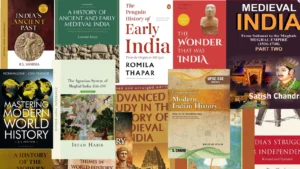
- Best Books for UPSC History Optional: Paper I and Paper II
The syllabus explains what needs to be studied, recommended books provide the material required for preparation, and previous year question papers help candidates understand how to apply that knowledge in the examination.
How to Analyse Trends in History Optional Previous Year Questions
Trend analysis can make preparation more organised, provided it is based on the actual questions asked in previous examinations.
Candidates can analyse the question papers using the following parameters:
- Topic-wise distribution: Classify questions according to the relevant syllabus units.
- Period-wise distribution: Identify the historical periods receiving attention in Paper I and Paper II.
- Nature of questions: Examine whether questions are factual, analytical, comparative or interpretative.
- Recurring themes: Identify topics that have appeared in different years.
- Historiographical dimensions: Identify questions that require engagement with historical interpretations and debates.
- Answer-writing requirements: Examine the level of explanation, evidence and analysis expected.
It is important to remember that PYQ analysis is a preparation tool, not a method of predicting the next examination paper. The complete syllabus should remain the foundation of preparation.
Frequently Asked Questions (FAQs)
1. Where can I download UPSC History Optional previous year question papers?
You can download History Optional Paper I and Paper II question papers from the year-wise PDF download tables provided in this article. You can also access the official question papers through the UPSC Previous Year Question Papers page.
2. How many papers are there in UPSC History Optional?
There are two papers in History Optional: Paper I and Paper II. Each paper carries 250 marks and has a duration of three hours.
3. What is covered in History Optional Paper I?
Paper I covers Ancient Indian History and Medieval Indian History, including political, social, economic, religious and cultural developments.
4. What is covered in History Optional Paper II?
Paper II covers Modern Indian History and World History, including colonial rule, the Indian national movement, independence and important global historical developments.
5. How many years of History Optional PYQs should I practise?
Candidates should ideally practise as many available previous year question papers as possible. A longer collection helps in understanding the changing nature of questions and identifying recurring themes. However, the complete syllabus must be covered irrespective of the number of years of papers practised.
6. Are previous year questions repeated in UPSC History Optional?
Some themes and syllabus areas may receive attention repeatedly, but candidates should not expect exact questions to be repeated. It is more useful to understand the underlying historical themes and prepare them comprehensively.
7. Should I solve History Optional PYQs before completing the syllabus?
Yes. Candidates can start reading and analysing PYQs alongside their syllabus preparation. Initially, use questions to understand the examination requirements. After completing a topic, attempt the relevant questions independently.
8. Are History Optional previous year question papers sufficient for preparation?
No. Previous year question papers are an important practice and analysis resource, but they cannot replace the official syllabus, standard reference books, historical sources and regular answer-writing practice.
Official Source
The Union Public Service Commission publishes previous year question papers on its official website. Candidates can refer to the following official resource to verify and access the original examination papers:
For authentic examination preparation, candidates should refer to the original UPSC question papers and the official syllabus.