Ram Nath Thakur: A Socialist Stalwart and Parliamentarian from Bihar
Ram Nath Thakur, a senior politician from Bihar, is widely known for his deep-rooted commitment to social justice, rural upliftment, and the legacy of socialist politics in India. As the son of Karpoori Thakur, one of the most iconic champions of backward classes and a former Chief Minister of Bihar, Ram Nath Thakur has upheld the values of simplicity, public service, and political integrity throughout his career.
Early Life and Family Background
Ram Nath Thakur was born into a politically active and socially conscious household. His father, Karpoori Thakur, was a towering figure in post-independence Indian politics, known for his unwavering stand on affirmative action, education for the poor, and prohibition. Growing up under such a father, Ram Nath Thakur imbibed socialist ideals and a passion for public service from an early age.
Despite hailing from a political family, Ram Nath Thakur remained grounded and avoided the trappings of dynastic entitlement. He focused instead on strengthening grassroots democracy and working closely with the masses in Bihar.
Political Career
Ram Nath Thakur entered active politics through the Janata Dal and later became an integral part of the Janata Dal (United), carrying forward the political mission of his father. He earned a reputation as a quiet worker, preferring action over rhetoric. His political journey was driven not by personal ambition but by a desire to improve the lives of the poor, marginalized, and backward communities of Bihar.
He has held various key party positions at the state and national levels, contributing to policy formation and political strategy.
Member of Parliament (Rajya Sabha)
Ram Nath Thakur was elected to the Rajya Sabha (Upper House of Parliament) from Bihar, representing the Janata Dal (United). In the Upper House, he actively raised issues concerning rural development, education, reservation for backward classes, and federalism.
Union Minister of State
In recognition of his long-standing service and experience, Ram Nath Thakur was appointed as a Union Minister of State during a coalition government at the Centre. He worked on portfolios related to rural employment, skill development, and social welfare schemes, with a strong focus on inclusive growth and empowerment of the underprivileged.
Preserving Karpuri Thakur’s Legacy
Ram Nath Thakur has played an active role in keeping alive the ideals of his father. He has consistently advocated for the Bharat Ratna to be conferred upon Karpuri Thakur, and he organizes events, seminars, and awareness drives to highlight his father’s historic contribution to social justice and backward class empowerment.
Personal Traits and Public Image
Known for his low-profile yet effective leadership, Ram Nath Thakur is widely respected for his honesty, simplicity, and approachability. He maintains close contact with his constituents and avoids extravagant displays of power. His lifestyle and values reflect those of his father and resonate deeply with the common people of Bihar.

Ram Nath Thakur Daughter
Ram Nath Thakur, the son of Bharat Ratna awardee Karpuri Thakur and a respected Union Minister from Bihar, has three daughters—Namita, Sneha, and Amrita. All three daughters have carried forward the family’s legacy of humility, service, and integrity.
Overview of Daughters
Namita
- Eldest daughter of Ram Nath Thakur.
- Expressed gratitude to PM Modi and CM Nitish Kumar on her father’s ministerial appointment.
- Attended centenary celebrations in Karpoorigram with her son, Aditya Anmol.
- Aditya is based in California after completing a Master’s in Public Policy.
Sneha
- Second daughter of Ram Nath Thakur.
- Currently lives in Mumbai.
- Returned to Karpoorigram for her grandfather’s centenary celebration and Bharat Ratna felicitation.
Amrita
- Youngest daughter of Ram Nath Thakur.
- Works with the Bihar government.
- Also attended the family and public events at Karpoorigram in 2024–25.
All three daughters have been raised with the ideals of service, simplicity, and dignity that define the Thakur family legacy. They continue to be active participants in cultural, social, and public events that honour their grandfather Karpuri Thakur and support their father’s public service journey.
Conclusion
Ram Nath Thakur stands as a symbol of principled and people-centric politics. His life and career embody the ideals of equality, service, and dignity for all. As Bihar and India continue their development journey, leaders like him provide a moral compass rooted in the spirit of the Constitution and the legacy of India’s socialist movements.
Also read: Karpoori Thakur: Bharat Ratna
UPSC Preparation Resources
Explore structured study materials, syllabus topics, practice questions and preparation resources.
UPSC Preparation
Everything you need to begin your Civil Services journey.
UPSC Prelims
Prepare for General Studies Paper I and CSAT.
UPSC Mains
Complete resources for descriptive examination preparation.
Study Resources
Study materials, practice questions and revision resources.
General Studies
Explore structured study materials, syllabus topics, practice questions and preparation resources.
GS Paper I
Indian Heritage, History, Geography and Society.
GS Paper II
Constitution, Governance, Social Justice and International Relations.
GS Paper III
Economy, Agriculture, Science, Environment and Security.
GS Paper IV
Ethics, Integrity, Aptitude and Case Studies.
Latest Articles

The Union Public Service Commission (UPSC) Civil Services Examination is one of India’s most competitive recruitment examinations. Every year, several … Read More »
What is the UPSC CSE – Civil Services Examination? The UPSC CSE (Civil Services Examination) is conducted every year by … Read More »

This page contains UPSC History Optional PYQ 2026 Paper I and II from UPSC Civil Services Main Examination 2026. Also … Read More »

Previous year question papers (PYQs) are among the most important resources for preparing for the History Optional subject in the … Read More »
Modern Indian History
View All
The Government of India Act 1853, commonly known as the Charter Act of 1853, was passed by the British Parliament … Read More »
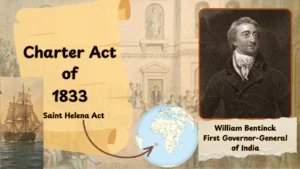
The Charter Act 1833 or the Charter Act of 1833, also known as Saint Helena Act of 1833, was one … Read More »
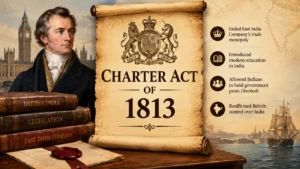
The Charter Act 1813 or the Charter Act of 1813 was an important British parliamentary legislation that renewed the East … Read More »
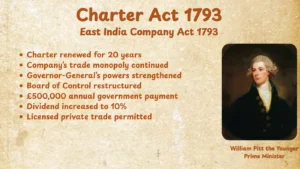
The Charter Act 1793, officially known as officially the East India Company Act 1793, was an important British parliamentary legislation that … Read More »
Indian Polity
View All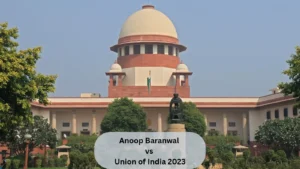
Anoop Baranwal vs Union of India (2023) is one of the most important Supreme Court judgments for understanding the appointment … Read More »
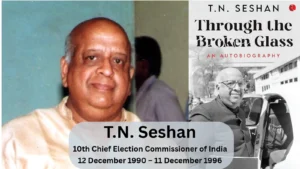
T.N. Seshan was the tenth Chief Election Commissioner of India and one of the most influential figures in the history … Read More »
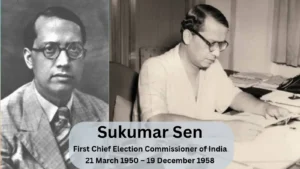
Sukumar Sen was the first Chief Election Commissioner of India and one of the most important figures in the early … Read More »
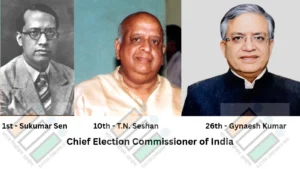
The Chief Election Commissioner (CEC) is the head of the Election Commission of India. Since the establishment of the Election … Read More »