Largest Glacier in India and World
This article provides info on the Largest Glacier in India and the world and also brief about the glaciers.
A glacier is a large mass of dense ice that has been formed over several years through the accumulation, compaction, and recrystallization of snow. The glaciers are found in regions where snowfall exceeds melting and evaporation over long periods, typically in polar and high-altitude mountain areas.
Glaciers are dynamic systems that flow slowly under their own weight due to gravity. Glaciers are an integral part of the hydrological cycle and play a significant role in shaping the Earth’s surface through erosion and deposition.
What is a Glacier?
Thus a glacier can be defined as a large, perennial accumulation of crystalline ice, snow, rock, sediment, and often liquid water that originates on land and moves down slope under the influence of its own weight and gravity.
Key Features of Glaciers
Formation: Glaciers are formed when snow accumulates over time and compresses into firn (a granular intermediate stage between snow and ice) and eventually solid ice due to the pressure of overlying layers.
Movement: Glaciers flow slowly, either downhill (in alpine or valley glaciers) or outward in all directions (in ice sheets or continental glaciers). This movement is driven by gravity and the internal deformation of ice.
Erosion: As glaciers move, they erode the landscape by plucking rocks and debris and grinding the underlying surface in a process known as abrasion.
Types of Glaciers
- Alpine Glaciers: Found in mountain regions, flowing down valleys.
- Ice Sheets: Vast continental-sized glaciers, such as those in Antarctica and Greenland.
- Piedmont Glaciers: Form when valley glaciers spread out at the base of a mountain range.
- Ice Caps: Smaller versions of ice sheets, covering less than 50,000 square kilometers.
Glaciers can also be divided as
- Valley Glaciers: Found in mountain regions, these glaciers flow down valleys and are common in the Himalayas.
- Continental Glaciers: Huge masses of ice covering vast areas of land, such as those in Antarctica and Greenland.
Importance of Glaciers
- Freshwater Reservoirs: Glaciers store about 68% of the world’s freshwater.
- Climate Indicators: Their advance and retreat provide critical evidence of climate change.
- Impact on Landscapes: They contribute to the creation of unique landforms like U-shaped valleys and glacial lakes.
What Glaciers Create?
Glaciers play a significant role in shaping the Earth’s landscape by forming valleys, lakes, and mountains. For instance, the Great Lakes in North America were created by glacial activity millions of years ago. Additionally, glaciers serve as vital sources of freshwater, supplying rivers and oceans with meltwater.
Largest Glacier in the World
The largest glacier in the world is the Lambert Glacier located in East Antarctica. It’s over 400 kilometers long, 80 kilometers wide, and 2,500 meters deep.
- The Lambert Glacier is one of the world’s fastest-moving ice streams.
- It drains 8% of the Antarctic ice sheet.
- It flows from the Antarctic ice sheet to the Amery Ice Shelf.
- It’s sometimes called a “river of ice” because it flows from high to low elevation, like a river.
Top 5 Largest Glaciers in the World
| SN | Glacier | Length | Location | Feature |
|---|---|---|---|---|
| 1. | Lambert Fisher Glacier | 400 km | 122 | Largest glacier of the world |
| 2. | Hubbard Glacier | 122 km | Alaska | Largest in North America. A tidewater glacier. Despite global warming, this glacier is expanding. |
| 3. | Fedchenko Glacier | 77 km | Tajikistan | One of the largest non-polar glaciers, located in the Karakoram Mountain Range on the Tajikistan-Afghanistan border. |
| 4. | Siachen Glacier | 75 km | India | Located in the eastern Karakoram range in the Himalayan mountains, the glacier is one of the highest, deadliest and costliest battlefield. |
| 5. | Biafo Glacier | 67 km | Pakistan | Meltwater from the Biafo Glacier flows to the Indus River |
Largest Glacier in India
Siachen Glacier is the largest glacier in India. It is 75 km long and is also the second-largest non-polar glacier on Earth. It is located in the eastern Karakoram range in the Himalayas.
Also read about Yala Glacier located in Nepal, which is shrinking and may vanish by 2040s.
Checkout: Global Glacier Casualty List
UPSC Preparation Resources
Explore structured study materials, syllabus topics, practice questions and preparation resources.
UPSC Preparation
Everything you need to begin your Civil Services journey.
UPSC Prelims
Prepare for General Studies Paper I and CSAT.
UPSC Mains
Complete resources for descriptive examination preparation.
Study Resources
Study materials, practice questions and revision resources.
General Studies
Explore structured study materials, syllabus topics, practice questions and preparation resources.
GS Paper I
Indian Heritage, History, Geography and Society.
GS Paper II
Constitution, Governance, Social Justice and International Relations.
GS Paper III
Economy, Agriculture, Science, Environment and Security.
GS Paper IV
Ethics, Integrity, Aptitude and Case Studies.
Latest Articles

The Union Public Service Commission (UPSC) Civil Services Examination is one of India’s most competitive recruitment examinations. Every year, several … Read More »

What is the UPSC CSE – Civil Services Examination? The UPSC CSE (Civil Services Examination) is conducted every year by … Read More »

This page contains UPSC History Optional PYQ 2026 Paper I and II from UPSC Civil Services Main Examination 2026. Also … Read More »

Previous year question papers (PYQs) are among the most important resources for preparing for the History Optional subject in the … Read More »
Modern Indian History
View All
The Government of India Act 1853, commonly known as the Charter Act of 1853, was passed by the British Parliament … Read More »
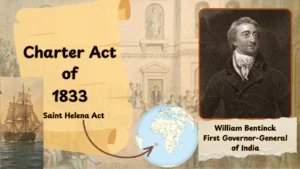
The Charter Act 1833 or the Charter Act of 1833, also known as Saint Helena Act of 1833, was one … Read More »
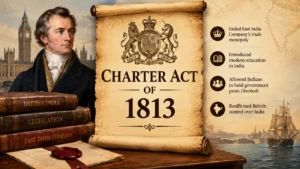
The Charter Act 1813 or the Charter Act of 1813 was an important British parliamentary legislation that renewed the East … Read More »

The Charter Act 1793, officially known as officially the East India Company Act 1793, was an important British parliamentary legislation that … Read More »
Indian Polity
View All
Anoop Baranwal vs Union of India (2023) is one of the most important Supreme Court judgments for understanding the appointment … Read More »

T.N. Seshan was the tenth Chief Election Commissioner of India and one of the most influential figures in the history … Read More »
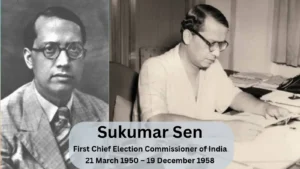
Sukumar Sen was the first Chief Election Commissioner of India and one of the most important figures in the early … Read More »

The Chief Election Commissioner (CEC) is the head of the Election Commission of India. Since the establishment of the Election … Read More »