Council of Ministers in Union Government MCQ CSP 2022
UPSC Civil Services (Prelims) Exam 2022 – General Studies Paper I
Question. Consider the following statements:
1. The Constitution of India classifies the ministers into four ranks viz. Cabinet Minister, Minister of State with Independent Charge, Minister of State and Deputy Minister.
2. The total number of ministers in the Union Government, including the Prime Minister, shall not exceed 15 percent of the total number of members in the Lok Sabha.
Which of the statements given above is/are correct?
(a) 1 only
(b) 2 only
(c) Both 1 and 2
(d) Neither 1 nor 2
प्रश्न. निम्नलिखित कथनों पर विचार कीजिए :
1. भारत का संविधान मंत्रियों को चार श्रेणियों, अर्थात कैबिनेट मंत्री, स्वतंत्र प्रभार वाले राज्य मंत्री, राज्य मंत्री और उप मंत्री में वर्गीकृत करता है।
2. संघ सरकार में, मंत्रियों की कुल संख्या, प्रधान मंत्री को मिलाकर, लोक सभा के कुल सदस्यों के 15% से अधिक नहीं होनी चाहिए।
उपर्युक्त कथनों में से कौन-सा/से सही है/हैं?
(a) केवल 1
(b) केवल 2
(c) 1 और 2 दोनों
(d) न तो 1, न ही 2
Answer: (b) 2 only
Explanation:
Statement 1 is incorrect.
The Constitution of India does not classify Council of Ministers. Article 74 provides that there shall be a Council of Ministers with the Prime Minister at the head to aid and advise the President who shall, in the exercise of his functions, act in accordance with such advice.
Statement 2 is correct.
The Constitution (Ninety-first Amendment) Act, 2003, which came with effect from January 1, 2004, inserted clause 1A in Article 75 of the Constitution. It says that,
Article 75, clause 1A: The total number of Ministers, including the Prime Minister, in the Council of Ministers shall not exceed fifteen percent of the total number of members of the House of the People.
Also read: 5 Best books for Indian Polity and Governance and The Constitution of India
UPSC Preparation Resources
Explore structured study materials, syllabus topics, practice questions and preparation resources.
UPSC Preparation
Everything you need to begin your Civil Services journey.
UPSC Prelims
Prepare for General Studies Paper I and CSAT.
UPSC Mains
Complete resources for descriptive examination preparation.
Study Resources
Study materials, practice questions and revision resources.
General Studies
Explore structured study materials, syllabus topics, practice questions and preparation resources.
GS Paper I
Indian Heritage, History, Geography and Society.
GS Paper II
Constitution, Governance, Social Justice and International Relations.
GS Paper III
Economy, Agriculture, Science, Environment and Security.
GS Paper IV
Ethics, Integrity, Aptitude and Case Studies.
Latest Articles
The Union Public Service Commission (UPSC) Civil Services Examination is one of India’s most competitive recruitment examinations. Every year, several … Read More »
What is the UPSC CSE – Civil Services Examination? The UPSC CSE (Civil Services Examination) is conducted every year by … Read More »

This page contains UPSC History Optional PYQ 2026 Paper I and II from UPSC Civil Services Main Examination 2026. Also … Read More »
Previous year question papers (PYQs) are among the most important resources for preparing for the History Optional subject in the … Read More »
Modern Indian History
View All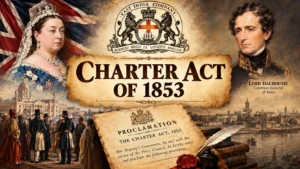
The Government of India Act 1853, commonly known as the Charter Act of 1853, was passed by the British Parliament … Read More »
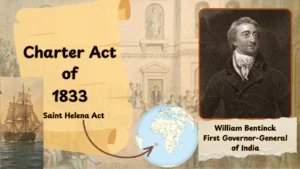
The Charter Act 1833 or the Charter Act of 1833, also known as Saint Helena Act of 1833, was one … Read More »
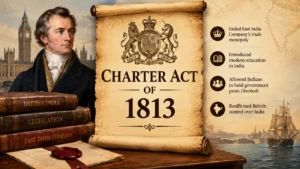
The Charter Act 1813 or the Charter Act of 1813 was an important British parliamentary legislation that renewed the East … Read More »
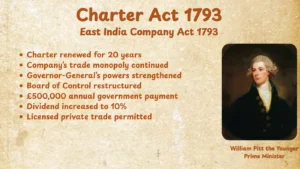
The Charter Act 1793, officially known as officially the East India Company Act 1793, was an important British parliamentary legislation that … Read More »
Indian Polity
View All
Anoop Baranwal vs Union of India (2023) is one of the most important Supreme Court judgments for understanding the appointment … Read More »
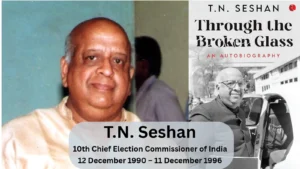
T.N. Seshan was the tenth Chief Election Commissioner of India and one of the most influential figures in the history … Read More »
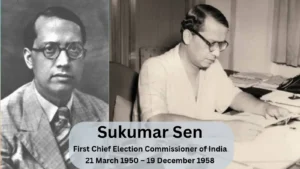
Sukumar Sen was the first Chief Election Commissioner of India and one of the most important figures in the early … Read More »
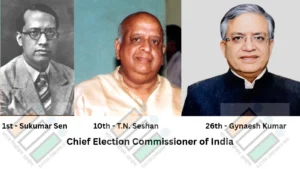
The Chief Election Commissioner (CEC) is the head of the Election Commission of India. Since the establishment of the Election … Read More »