Mahatma Gandhi Returns from South Africa to India on 9 January 1915
M.K. Gandhi went to South Africa on 24 May 1893 to attend to a legal matter on behalf of a client from his hometown of Porbandar in Gujarat. He spent about 21 years in South Africa where he developed his philosophy of Satyagraha (non-violent resistance) and became a prominent leader in the Indian community’s struggle for civil rights.
Gandhi Return to India 1915
After spending about 21 years in South Africa, M.K. Gandhi decided to return to India. Gandhi took ‘S.S. Arabia’ ship from Cape Town in South Africa on 19 July 1914 and reached Apollo Bunder in Bombay on 9 January 1915.
To mark the occasion and contribution of the Indian community living abroad, every year since 2003, 9th January is celebrated as Pravasi Bharatiya Divas or Non-Resident Indian Day (NRI Day).

The work done by M.K. Gandhi in South Africa for the Indian community influenced several leaders in India. On his return from South Africa, M.K. Gandhi was greeted amid jostling and cheers by a huge crowd at Apollo Bunder in Bombay. Three days later he was honored by the people of Bombay at a magnificent reception in the palatial house of a Bombay magnate Jehangir Petit.
Gopal Krishna Gokhale, Political Mentor or Guru of Gandhi
M.K. Gandhi was influenced by Gopal Krishna Gokhale. Gandhi considered Gokhale as his political mentor. Gokhale persuaded Gandhi not to express himself upon public questions for a year, which was to be a “year of probation”. And also persuaded to travel into various parts of India and understand its problems. Gandhi started his journey and travelled to Rangoon in Myanmar to meet Dr. Pranjivan Mehta, a Mumbai-born physician, lawyer and jeweler who settled in Burma.
While on way to Rangoon, Gandhi halted at Shanti Niketan in Calcutta. While Gandhi was in Calcutta, Gokhale died of physical stress and strain on 19 February 1915 in Pune, Maharashtra. Gandhi was stunned. He mourned Gokhale by going barefoot for a year. Gandhi described Gokhale as,
Pure as crystal, gentle as a lamb, brave as a lion and chivalrous to a fault and the most perfect man in the political field.

Gandhi Travels to Various Parts of India
Later, in April 1915, Gandhi travelled to Kumbh Mela in Haridwar, Uttarakhand. The primary reason to travel to Haridwar was to meet Mahatma Munshi Ram also known as Swami Shraddhanand, the Arya Samaj leader who established Gurukul in Kangri in Haridwar in 1902. The Haridwar experiences proved to be of inestimable value to Gandhi as it led him to decide where he wants to live and what he wants to do next.
Gandhi Established Satyagraha Ashram or Sabarmati Ashram in Ahmedabad
Influenced by the Haridwar experience, in May 1915, M.K. Gandhi established ‘Satyagraha Ashram’ in Kochrab, near Ahmedabad in Gujarat. It was the spiritual retreat for him and his followers. The Ashram was similar to Phoenix Farm of South Africa. He invited untouchable or ‘harijan’ families to live in the Ashram. Later in June 1917, the Ashram was moved near Sabarmati River in Ahmedabad and renamed as Sabarmati Ashram.
In June 1915, Mahatma Gandhiji was awarded ‘Kaisar-i-Hind’ gold medal by the Viceroy Lord Hardinge for his contribution to ambulance services in South Africa. However, in later years in 1920 Gandhi returned the medal as part of the protest against the Jallianwala Bagh massacre.
In February 1916, Gandhiji travelled to Varanasi, Uttar Pradesh, and participated in the opening ceremony of Banaras Hindu University (BHU) in Varanasi, Uttar Pradesh and delivered speech. In December 1916, he met with Jawahar Lal Nehru for the first time while participating in the annual session of Congress held in Lucknow, Uttar Pradesh.
Read Next: Champaran Satyagraha, April 1917
Sources: www.mkgandhi.org
Comprehensive Modern Indian History : From 1707 to The Modern Times by Brijesh Singh
Question: When did Mahatma Gandhi return from South Africa to India?
(a) 9 January 1915
(b) 21 March 1915
(c) 15 January 1916
(d) 10 April 1916
Answer: (a) 9 January 1915
Topic: History of India › Modern Indian History › Indian National Movement
Explanation: See above article
Source(s):
Comprehensive Modern Indian History : From 1707 to The Modern Times by Brijesh Singh
Difficulty level: Easy
UPSC Preparation Resources
Explore structured study materials, syllabus topics, practice questions and preparation resources.
UPSC Preparation
Everything you need to begin your Civil Services journey.
UPSC Prelims
Prepare for General Studies Paper I and CSAT.
UPSC Mains
Complete resources for descriptive examination preparation.
Study Resources
Study materials, practice questions and revision resources.
General Studies
Explore structured study materials, syllabus topics, practice questions and preparation resources.
GS Paper I
Indian Heritage, History, Geography and Society.
GS Paper II
Constitution, Governance, Social Justice and International Relations.
GS Paper III
Economy, Agriculture, Science, Environment and Security.
GS Paper IV
Ethics, Integrity, Aptitude and Case Studies.
Latest Articles
The Union Public Service Commission (UPSC) Civil Services Examination is one of India’s most competitive recruitment examinations. Every year, several … Read More »
What is the UPSC CSE – Civil Services Examination? The UPSC CSE (Civil Services Examination) is conducted every year by … Read More »

This page contains UPSC History Optional PYQ 2026 Paper I and II from UPSC Civil Services Main Examination 2026. Also … Read More »

Previous year question papers (PYQs) are among the most important resources for preparing for the History Optional subject in the … Read More »
Modern Indian History
View All
The Government of India Act 1853, commonly known as the Charter Act of 1853, was passed by the British Parliament … Read More »
The Charter Act 1833 or the Charter Act of 1833, also known as Saint Helena Act of 1833, was one … Read More »
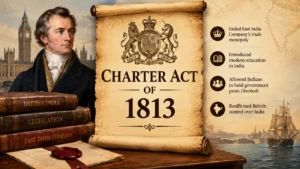
The Charter Act 1813 or the Charter Act of 1813 was an important British parliamentary legislation that renewed the East … Read More »
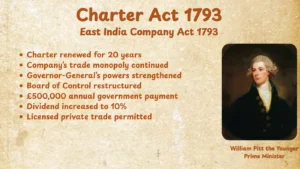
The Charter Act 1793, officially known as officially the East India Company Act 1793, was an important British parliamentary legislation that … Read More »
Indian Polity
View All
Anoop Baranwal vs Union of India (2023) is one of the most important Supreme Court judgments for understanding the appointment … Read More »
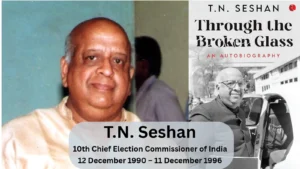
T.N. Seshan was the tenth Chief Election Commissioner of India and one of the most influential figures in the history … Read More »
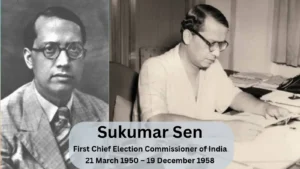
Sukumar Sen was the first Chief Election Commissioner of India and one of the most important figures in the early … Read More »
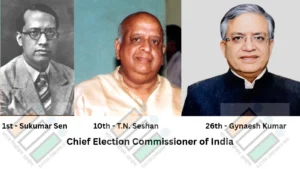
The Chief Election Commissioner (CEC) is the head of the Election Commission of India. Since the establishment of the Election … Read More »